How to Write a Thesis Statement: 4 Steps, Formulas and Examples
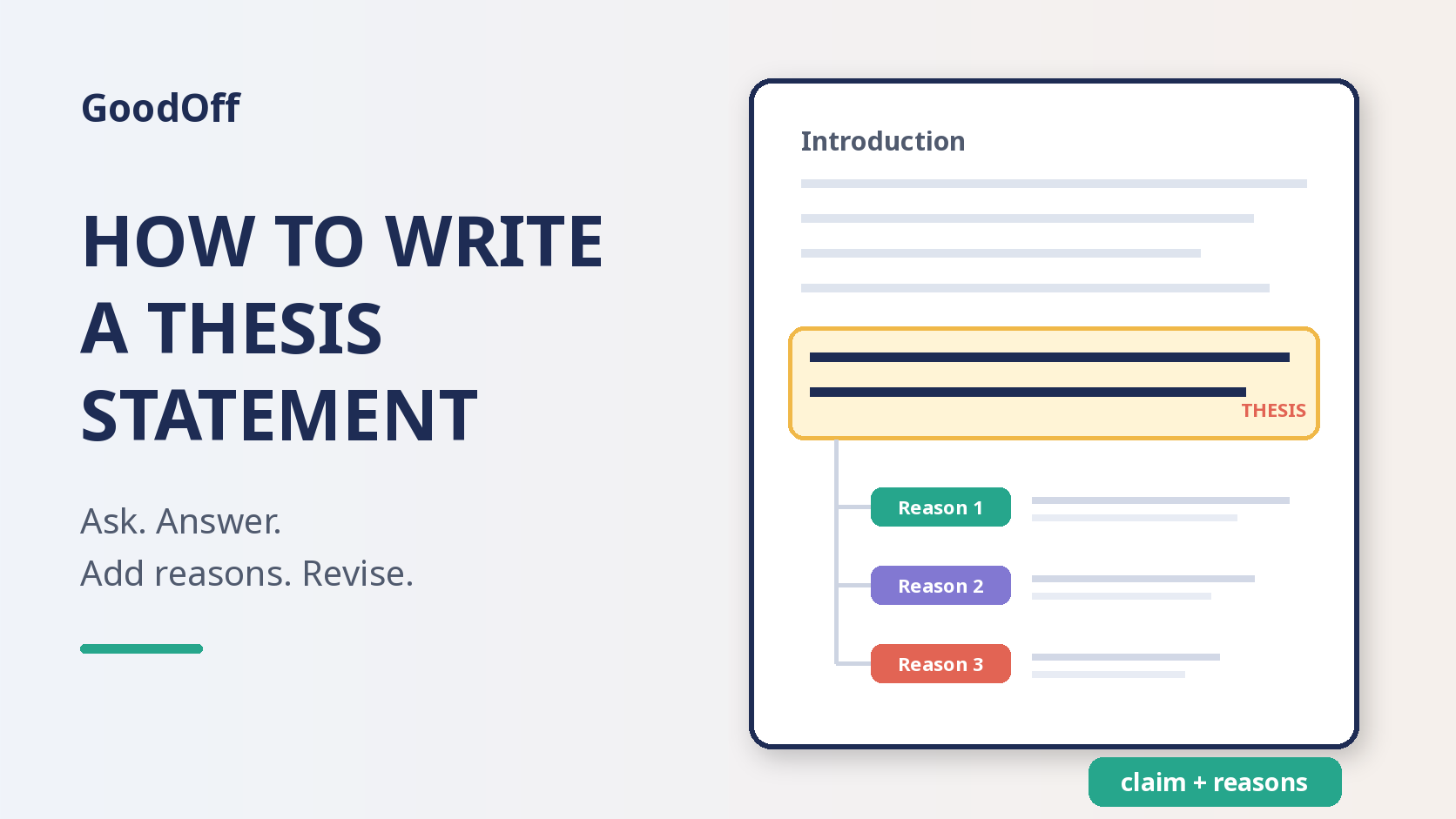
How to write a thesis statement in 4 steps, with fill-in formulas for each essay type, weak-to-strong rewrites, where it goes, and a 6-question thesis test.
Practical strategies, templates, and stories from the GoodOff editorial team to help you plan more focused study sessions.

How to write a thesis statement in 4 steps, with fill-in formulas for each essay type, weak-to-strong rewrites, where it goes, and a 6-question thesis test.

Feeling like you “got it” in lecture but blanking on the exam is usually recognition, not mastery. Here’s how to close the recognition-vs-recall gap with activ

IB Math AA vs AI explained: course differences, SL vs HL paper weightings, how the IA is marked out of 20, and 4 habits plus an 8-week plan to get a 7.

Human anatomy basics for beginners: levels of organization, anatomical position, directional terms, body planes, cavities, word roots, and how to study them.

Morning brain fog is often sleep inertia. Use light, movement, and task timing so hard study waits for your peak hours instead of the first groggy minutes.

Why your study schedule falls apart: the planning fallacy, vague blocks, no miss rule. Build one that sticks with if-then triggers, buffer slots and a review.

How to memorize faster without rereading: match the technique to the material, from acronyms to a memory palace, with a worked example and a way to test it.

Behind on schoolwork? Sort everything into must, should and skip, follow a 7-day catch-up plan, and use a short email script to ask instructors for help.

The Feynman Technique: explain a concept in plain words from memory, find the gaps, fix them, and repeat. Includes a 15-minute template and worked example.

How to read a textbook so you remember it: preview, ask a question, read one section, then close the book and recall. Includes a time budget for a chapter.

What an independent word learning strategy is, four core moves (context, word parts, confirm, lock in), and a 60-second habit you can use while reading.

Study hard but blank on exam day? Here's the science of test anxiety and how to overcome it so what you know shows up when it counts.

How to organize notes for studying: file them by the question they answer, try a four-part note (question, answer, example, trap) and a weekly cleanup.
GoodOff's learning tools turn your source into a study kit you can use for focused review.