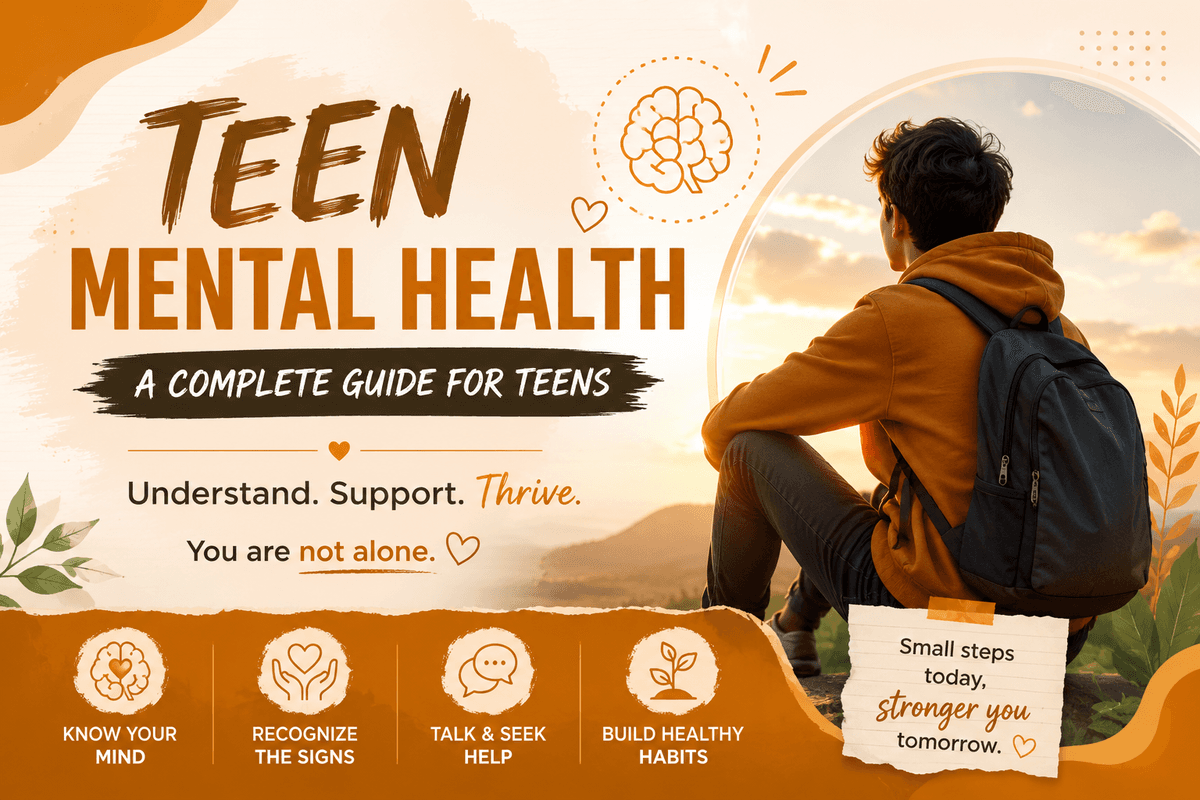
Adolescence is one of the most emotionally intense periods of life, and the numbers back that up. Globally, an estimated 1 in 7 adolescents aged 10 to 19 experiences a diagnosable mental health condition, according to the World Health Organization. In the United States, the most recent National Survey of Children's Health found that more than 5.3 million adolescents ages 12 to 17 (about 1 in 5) had a current, diagnosed mental or behavioral health condition in 2023.
This guide lays out what teens and the adults who support them should know: which conditions are most common, how to recognize warning signs, what actually helps, and where to find real, professional support.
Why Teen Mental Health Matters
Adolescence is a critical window for brain development. The WHO notes that this is a stage of rapid brain growth during which teens build the cognitive and social-emotional skills that shape their mental health well into adulthood. That's part of why early support matters so much: WHO data indicates that half of all mental health conditions in adulthood begin by age 18, yet most cases go undetected and untreated at the time.
What the Data Shows
Anxiety is the most commonly diagnosed condition among U.S. adolescents, affecting 16.1% of 12 to 17 year olds, according to the 2023 National Survey of Children's Health data.
Depression affects 8.4% of U.S. adolescents in the same survey.
Diagnosed anxiety increased 61% and depression increased 45% among U.S. adolescents between 2016 and 2023.
Girls are diagnosed with anxiety and depression at notably higher rates than boys, while boys are diagnosed with behavior or conduct problems more often.
Encouragingly, the same survey found that among adolescents whose caregivers said they needed mental health treatment, over 82% received it in the past year.
Globally, the WHO reports that depression, anxiety, and behavioral disorders are among the leading causes of illness and disability in adolescents, and suicide is among the leading causes of death for people aged 15 to 29.
Common Mental Health Conditions in Teens
1. Anxiety Disorders
According to the National Institute of Mental Health, generalized anxiety in teens can include excessive worry, restlessness, irritability, trouble concentrating or sleeping, headaches, stomach pain, and fatigue. NIMH notes that anxiety and depression often overlap and can worsen each other, but they are distinct conditions. Common treatments include psychotherapy (such as cognitive behavioral therapy), and in some cases medication.
2. Depression
Depression involves more than temporary sadness. Clinically, it typically involves a low mood or loss of interest in activities lasting two weeks or longer, along with changes in sleep, appetite, energy, or concentration. NSCH data shows depression is the second most commonly diagnosed condition among U.S. teens, after anxiety.
3. Behavioral and Conduct Concerns
These are the third most common diagnosed condition among U.S. adolescents, more frequently diagnosed in boys than girls, according to NSCH data.
4. Risk Factors Identified by WHO
The WHO identifies several factors that increase the likelihood of adolescent mental health difficulties, including exposure to adversity or violence, poverty, harsh parenting, peer pressure, exploration of identity, and the influence of social media and gender norms on self-perception. Importantly, WHO notes the more risk factors a teen is exposed to, the greater the potential impact on their mental health, though risk factors are not guarantees of a diagnosis.
Warning Signs Worth Paying Attention To
Clinical and public health sources consistently point to these as signs that warrant a conversation with a doctor, school counselor, or mental health professional:
Withdrawal from friends, family, or activities once enjoyed
Persistent changes in sleep or appetite
Ongoing sadness, irritability, or mood swings lasting two weeks or more
Difficulty concentrating or a noticeable drop in school performance
Expressions of hopelessness or worthlessness
Increased use of alcohol or other substances
Talking about self-harm, suicide, or being a burden to others
If a teen expresses thoughts of suicide or self-harm, treat it as urgent. Contact a trusted adult, a school counselor, or the 988 Suicide & Crisis Lifeline right away.
Evidence-Informed Coping Strategies
The WHO specifically highlights adolescence as the time to build habits that protect long-term mental health: healthy sleep patterns, regular exercise, and skills for coping, problem-solving, and managing emotions. Strategies with strong support include:
Talking to someone. Research on teen telemental health use found that teens experiencing higher stress or depression symptoms were less likely to talk to a parent and more likely to tell no one at all, which is one of the reasons professionals emphasize building at least one reliable, trusted connection, whether that's a parent, friend, teacher, or counselor.
Physical activity. Regular exercise is consistently associated with better mood regulation and lower anxiety in both WHO guidance and clinical literature.
Consistent sleep. Sleep difficulty is listed by NIMH as both a symptom and a contributing factor in anxiety and depression, making sleep hygiene a frequent first-line recommendation.
Structured coping and problem-solving skills. WHO guidance and adolescent mental health literature point to teaching concrete coping and problem-solving skills, rather than relying on willpower alone, as more effective for managing chronic stress.
Reducing isolation. Since teens who struggle are more likely to tell no one, professionals recommend actively checking in rather than waiting for a teen to bring up how they're feeling.
How Parents and Educators Can Help
Ask directly and calmly. Asking a teen directly about suicidal thoughts does not increase risk. It is a recommended first step in crisis screening used by trained 988 counselors.
Watch for patterns, not single bad days. Clinical definitions of anxiety and depression require symptoms to persist, generally two weeks or more, not just an isolated rough day.
Take reports seriously even if they seem inconsistent with what you observe. A study on transgender and non-binary adolescents found that caregivers' assessments of a teen's anxiety symptoms often did not match what the teen reported themselves, with teens consistently reporting more distress than caregivers detected.
Normalize professional support. With roughly 1 in 5 U.S. teens affected, seeking help is common and evidence-based, not a last resort.
Where to Get Real Help
988 Suicide & Crisis Lifeline (U.S.): Call, text, or chat 988, free and confidential, 24/7. Trained crisis counselors help with suicidal thoughts, substance use, anxiety, eating and body image concerns, abuse, trauma, and more. Services are available in English, Spanish, and over 240 additional languages through interpretation services.
School counselors or psychologists: Often the fastest, most accessible point of contact for an initial conversation.
Primary care doctors and pediatricians: Can screen for mental health concerns and refer to specialists.
Licensed therapists: Offer evidence-based treatments such as cognitive behavioral therapy, proven effective for anxiety and depression.
A trusted adult: Sometimes the most important first step is simply telling one person.
A study published in JAMA, reported by PBS News, found that in the first two and a half years after the 988 Lifeline launched, suicide deaths among 15 to 23 year olds were about 11% lower than researchers had projected, translating to an estimated 4,400 fewer deaths than expected. This is one of the clearest pieces of evidence that reaching out for crisis support works.
Final Thoughts
The data is consistent across WHO, U.S. federal survey data, and peer-reviewed research: teen mental health struggles are common, frequently treatable, and often under-recognized specifically because teens are less likely to bring them up on their own. Building open communication, watching for real warning signs rather than normal mood swings, and knowing where to turn, whether that's a school counselor, doctor, therapist, or the 988 Lifeline, gives teens a genuinely better shot at getting help early.