How to Write a Lab Report: Section-by-Section Guide (With an Example)
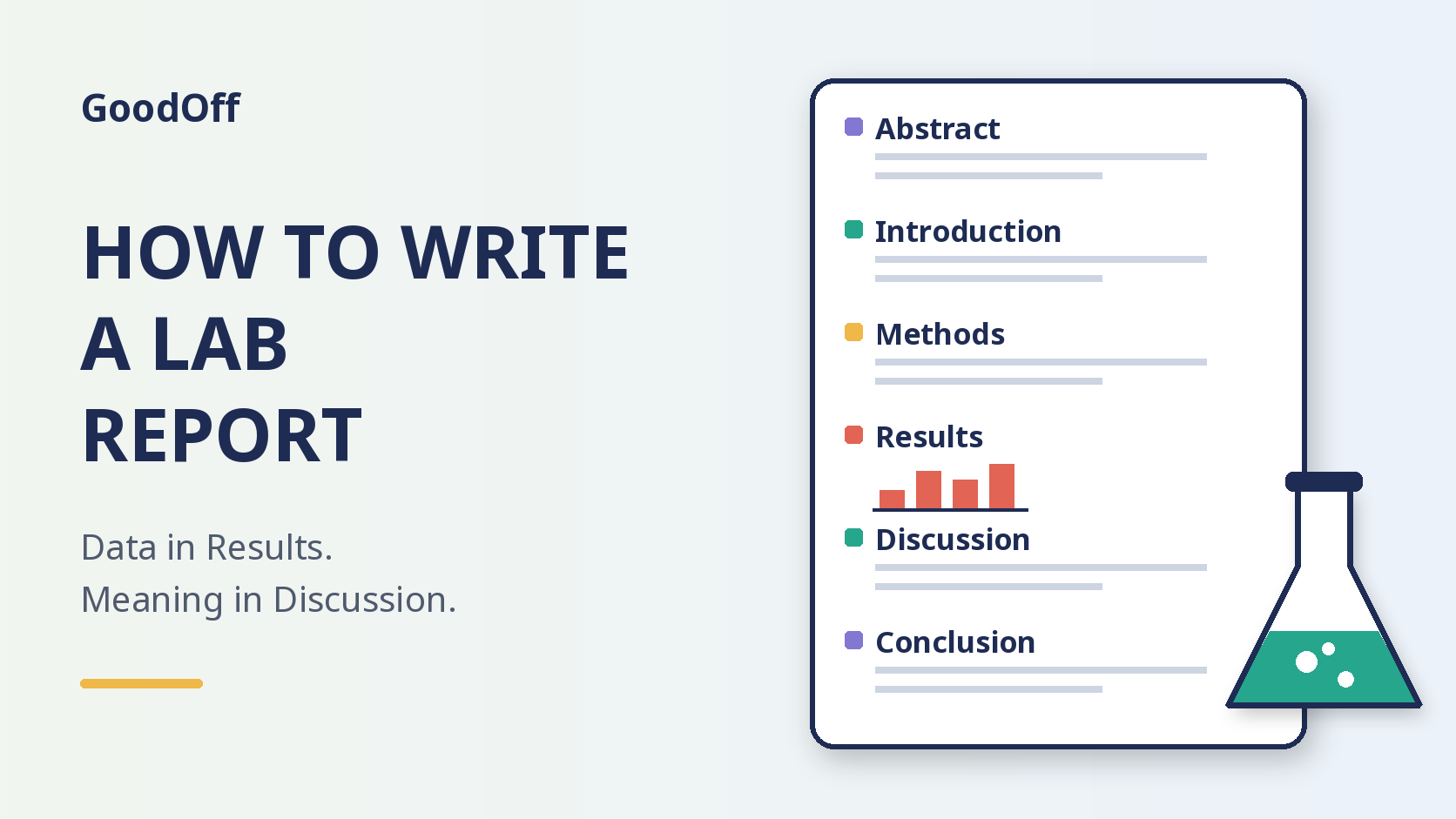
How to write a lab report: what goes in each section, the best order to write it, tense and figure rules, how to discuss error, and a worked pendulum example.
Practical strategies, templates, and stories from the GoodOff editorial team to help you plan more focused study sessions.

How to write a lab report: what goes in each section, the best order to write it, tense and figure rules, how to discuss error, and a worked pendulum example.

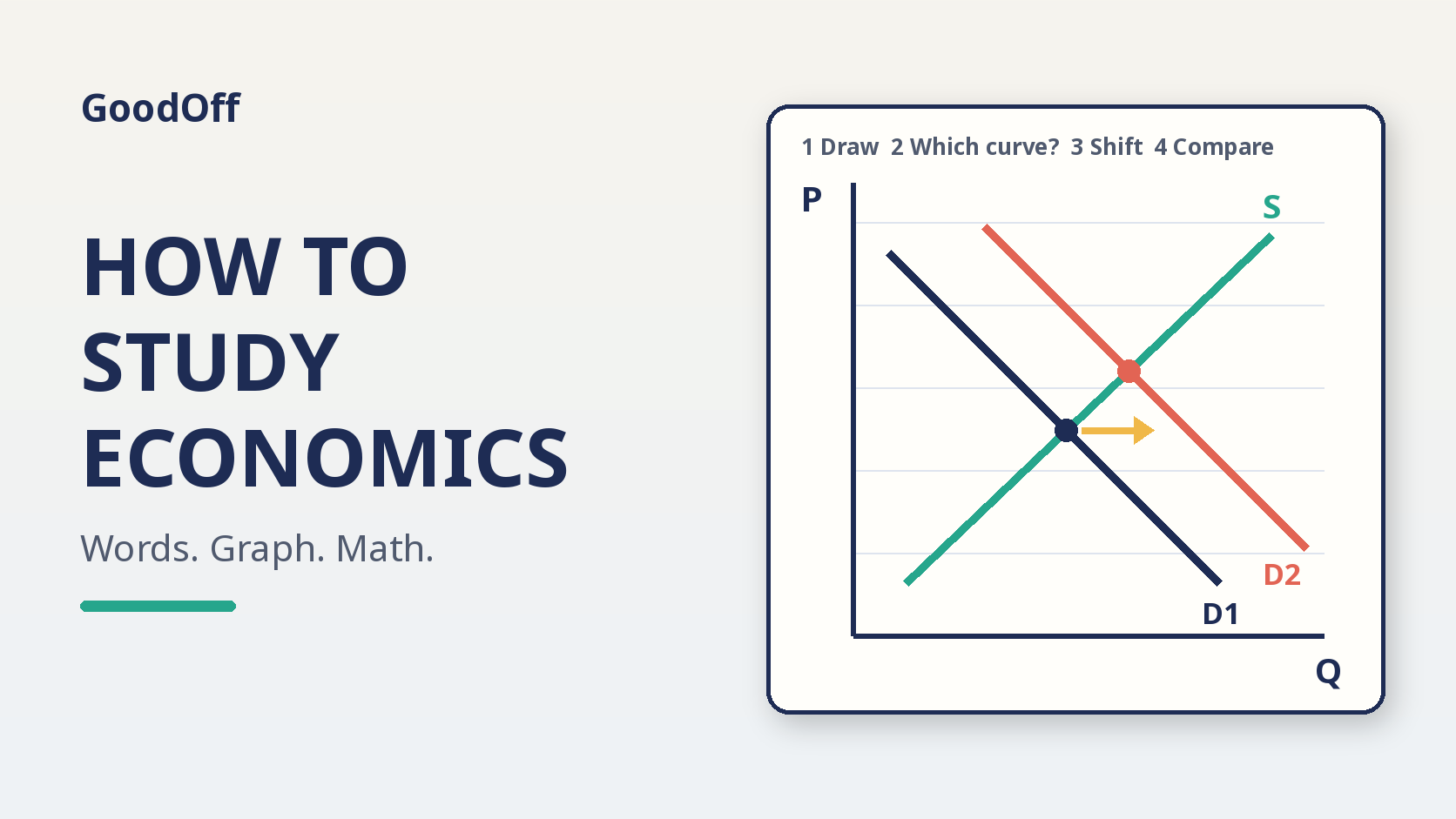
How to study economics: learn each model in words, graphs and math, use a four-step shift method, keep a shifter list, and work through a two-shock example.

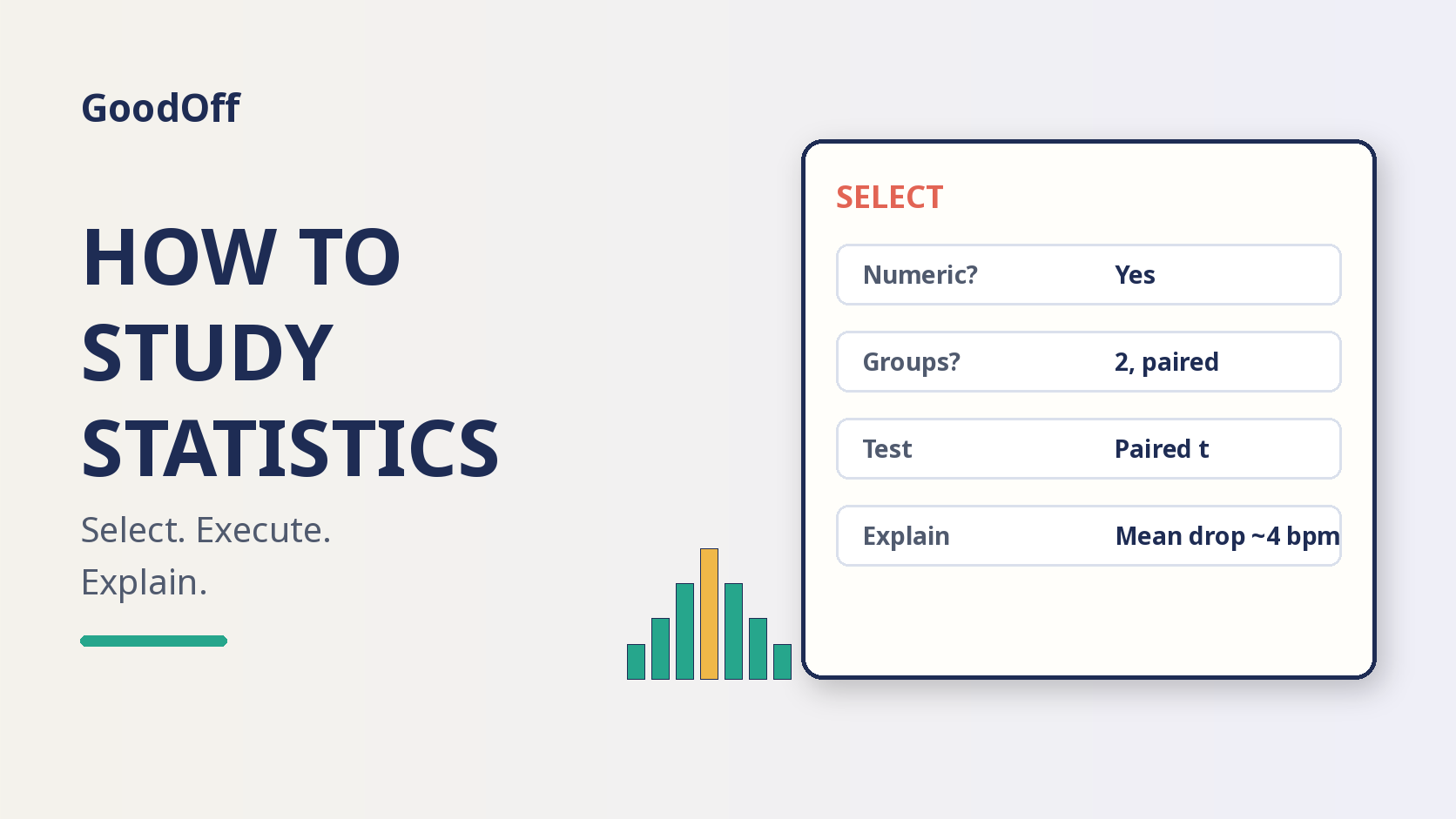
How to study statistics: sort by question type, use Select-Execute-Explain, keep when-to-apply cards, mix practice, and a paired t-test worked example.

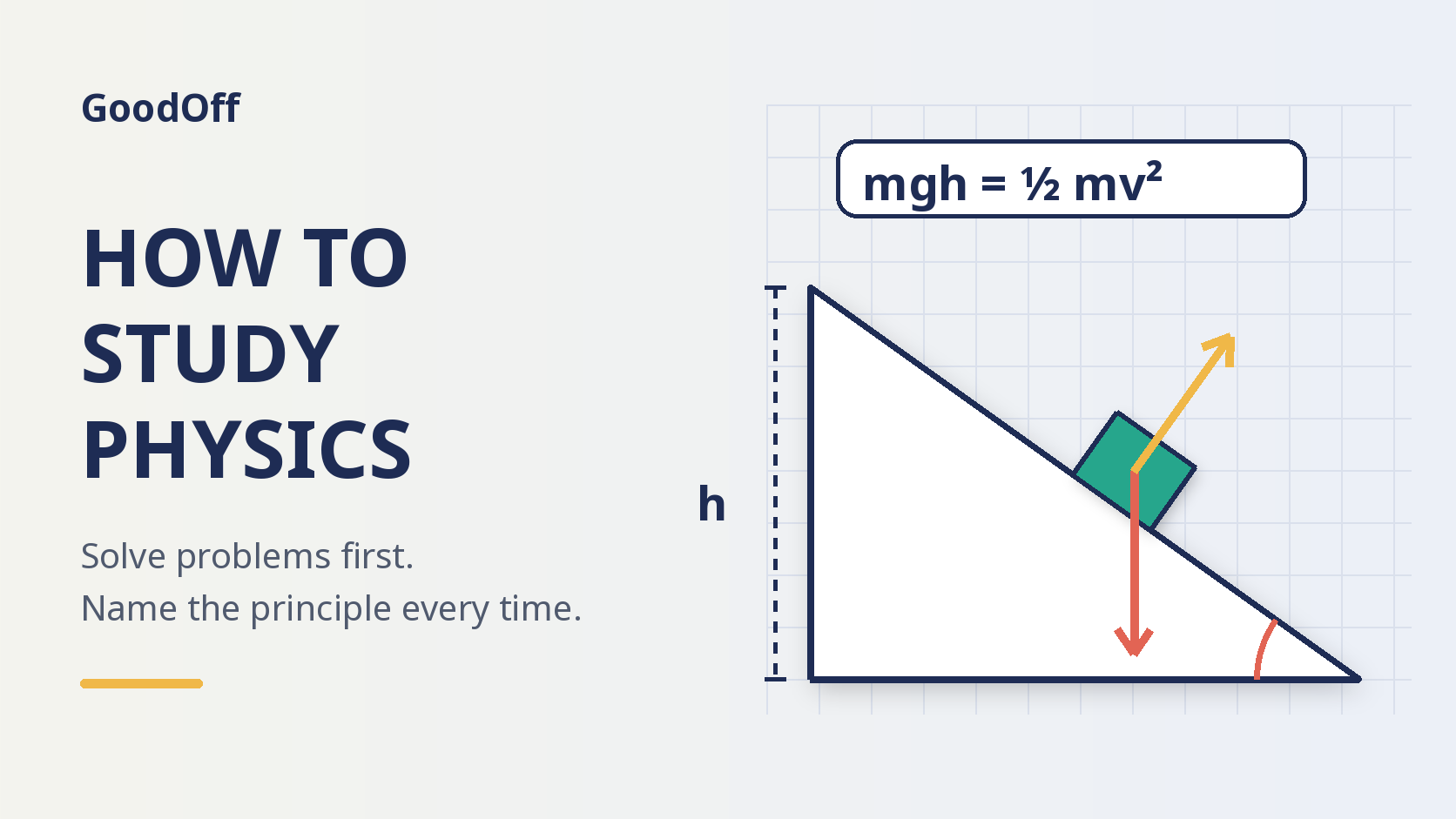
How to study physics: a problem-first method, a 5-step solving routine, mixed practice and formula cards that say when to use them, plus a worked example.

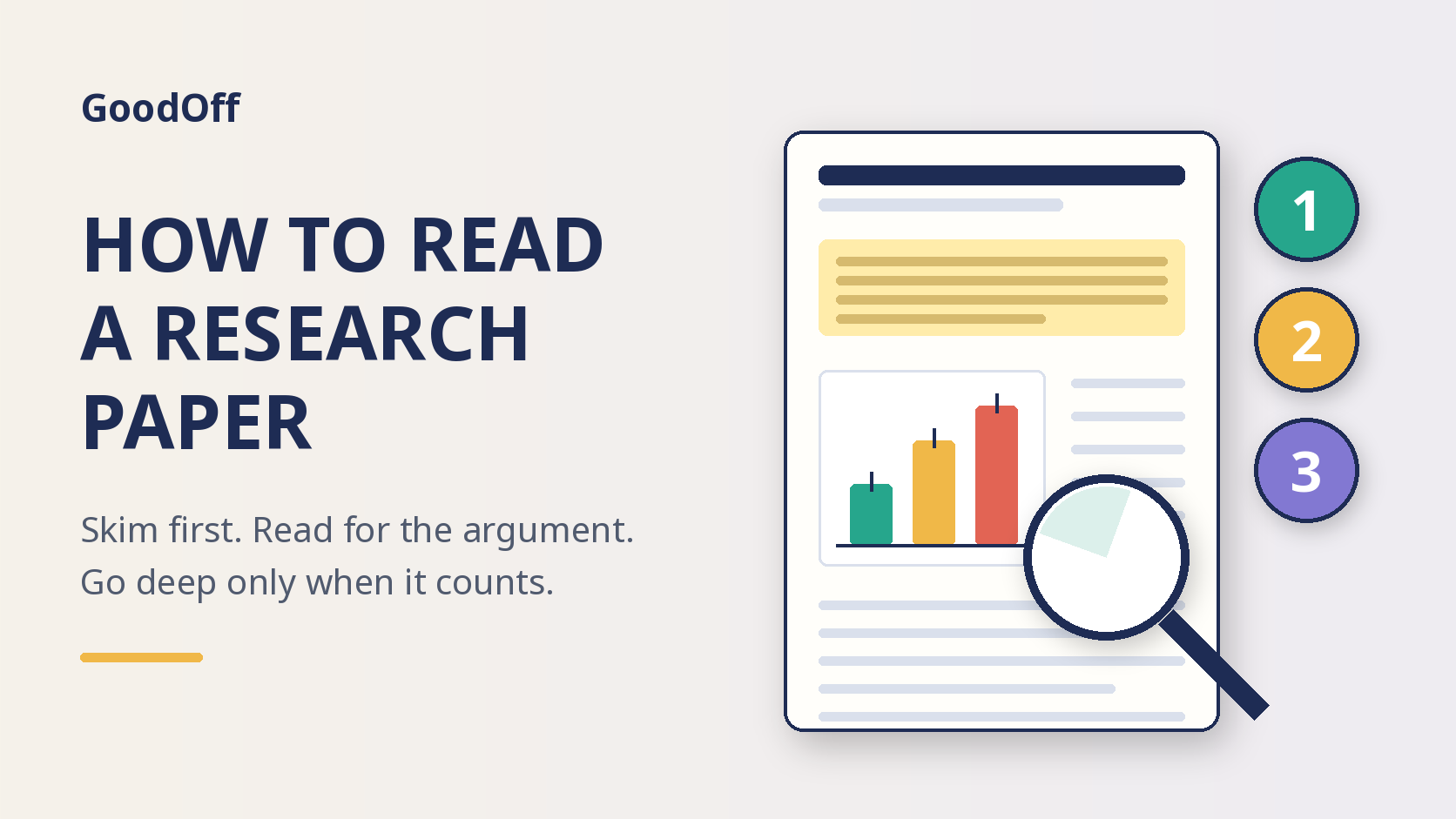
How to read a research paper: a 3-pass method, how to read figures, handle jargon and the methods section, and a one-page note template to help you remember it.

How to study for an essay exam: organize notes by theme, predict questions, write a thesis for each, practice from memory under a timer, and plan your time.

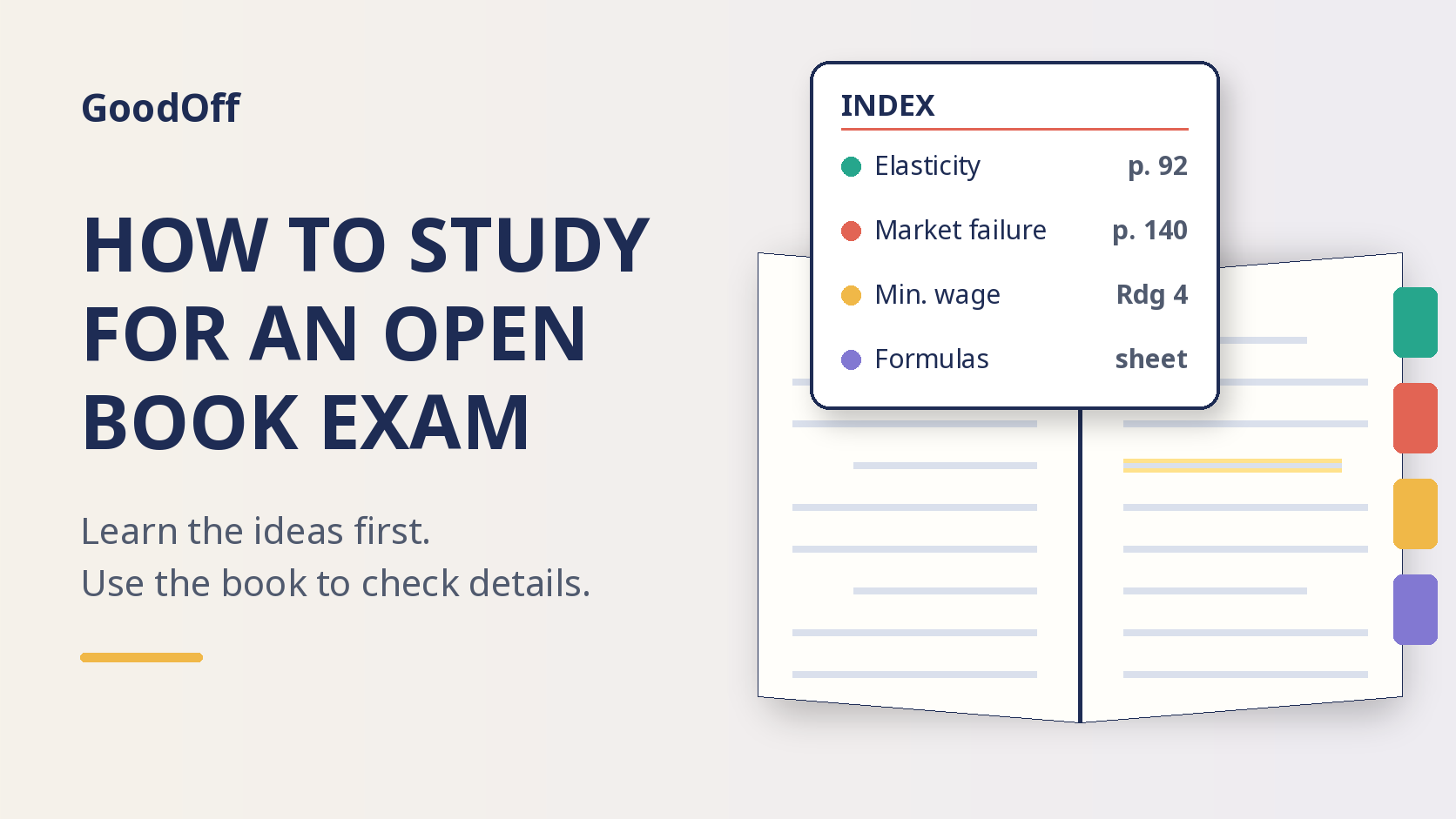
How to study for an open book exam: learn core ideas first, cut and tab your notes, build a page-number index, and practice timed with only your reference set.

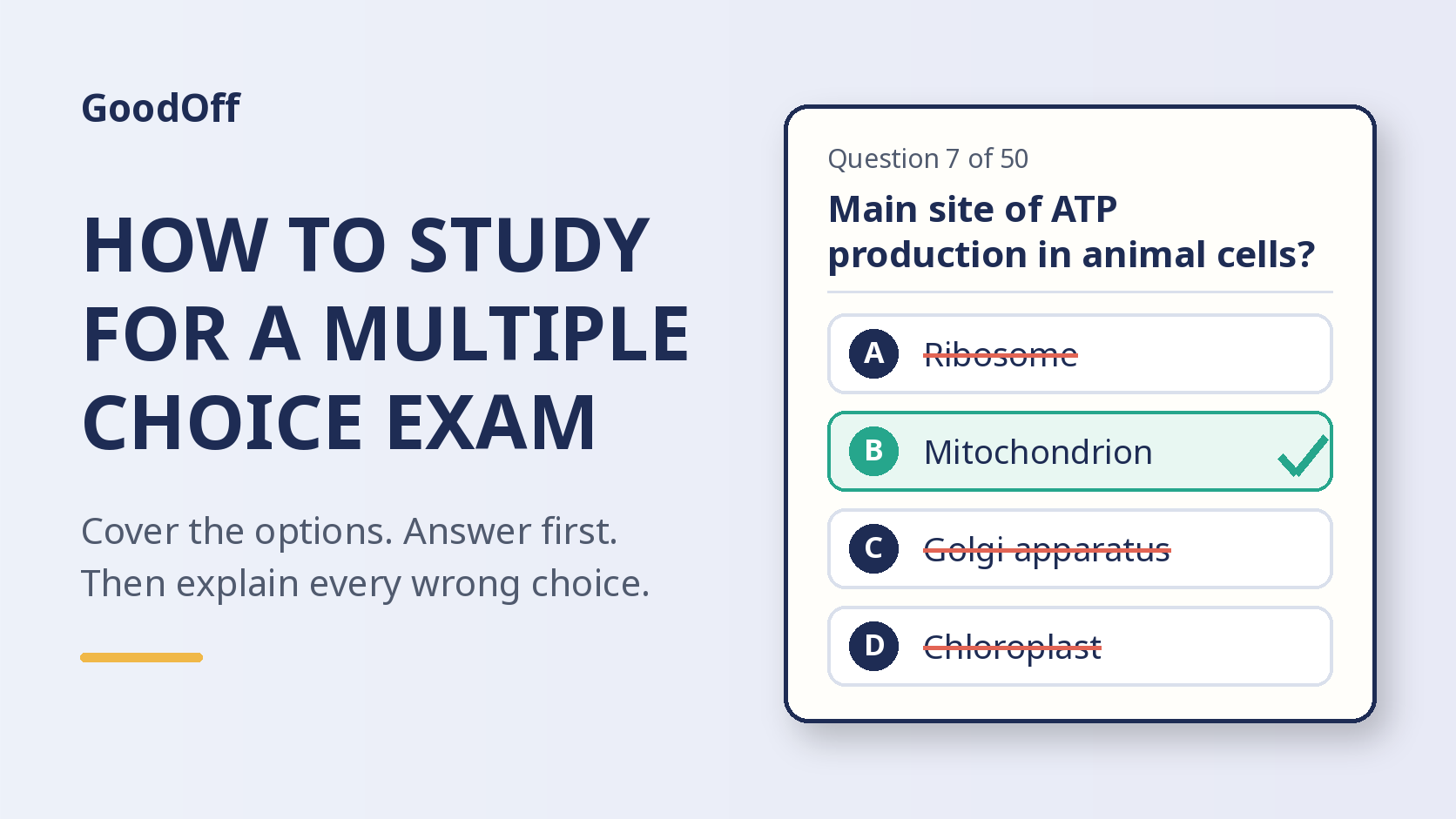
How to study for a multiple choice exam: practice with options covered, explain every wrong choice, learn look-alikes, log mistakes and when to change answers.

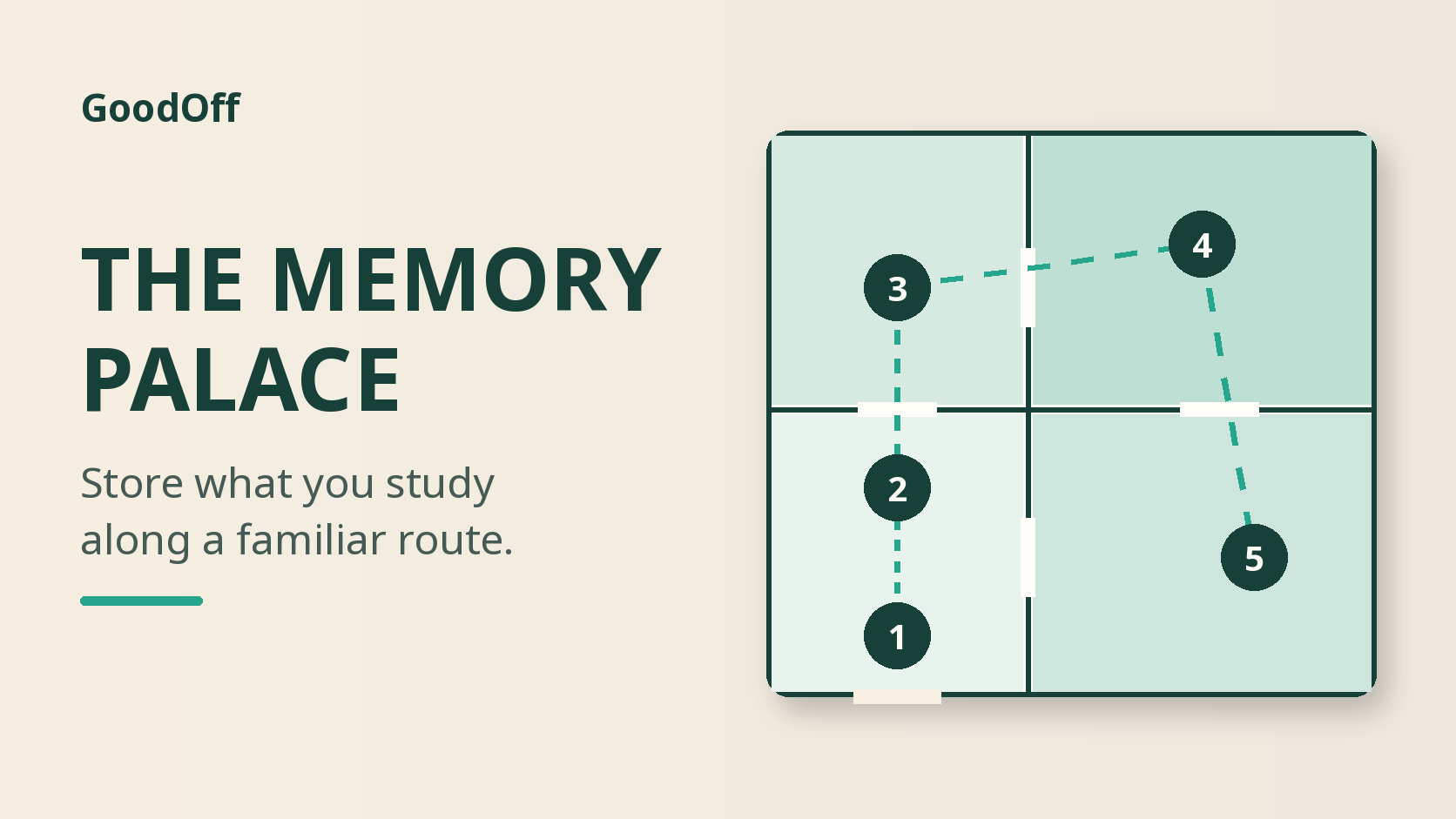
Learn the memory palace technique step by step: how to build one, real study examples, what the research says, and when the method of loci helps for exams.

Learn how to make a mind map for studying in 7 steps, with a worked example, what research says about mind maps, and how to redraw maps from memory to revise.

Studying for the SAT but not seeing results? Discover 7 common SAT study mistakes and practical ways to improve your score, manage time, and remember more.

Learn the SQ3R method step by step: survey, question, read, recite, review. See a worked example, what research says, and a faster version for busy weeks.

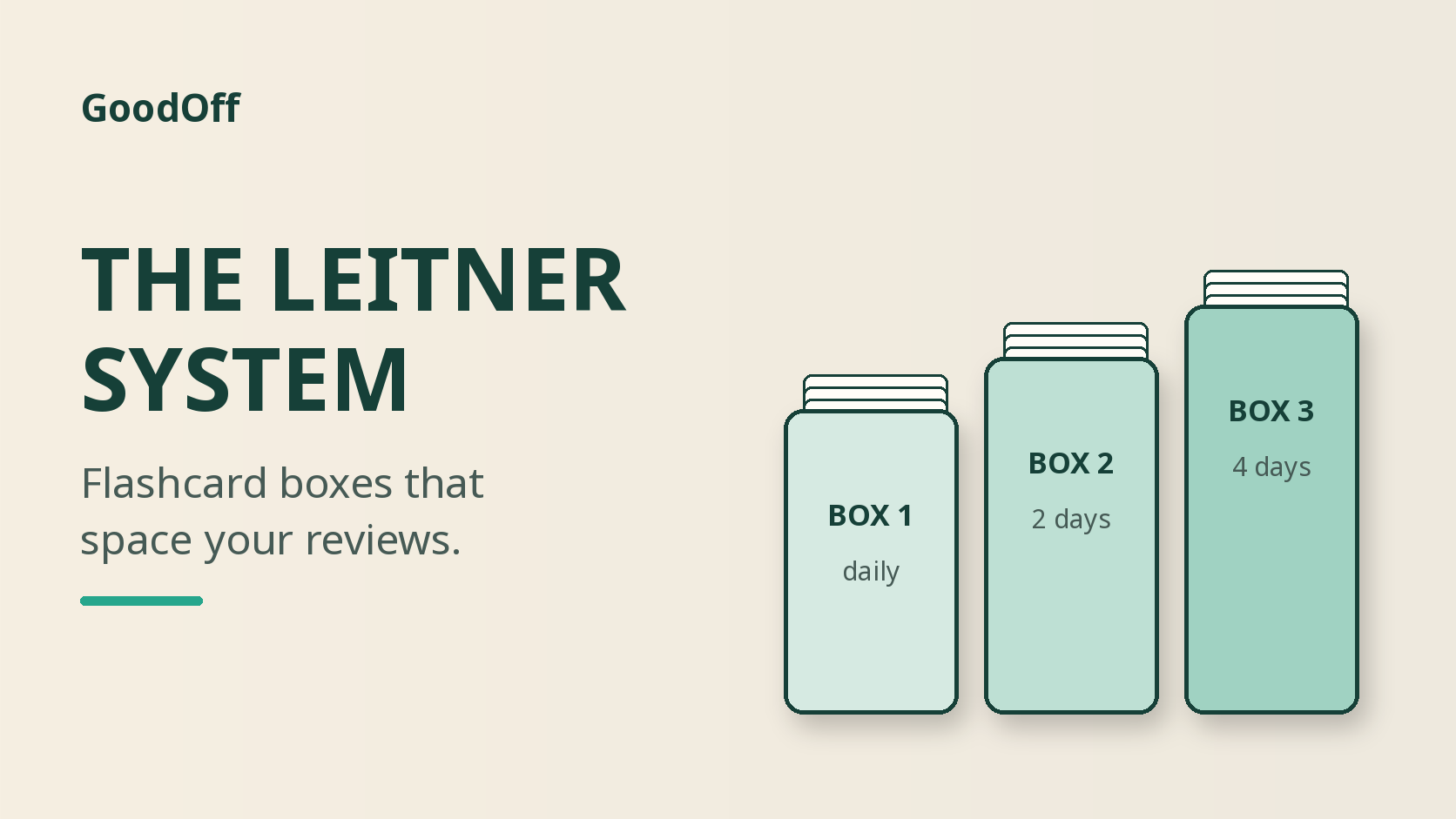
Learn the Leitner system for flashcards: how the boxes work, a 3- and 5-box review schedule you can copy, common mistakes, and how it compares with FSRS.
GoodOff's learning tools turn your source into a study kit you can use for focused review.