Internship year is supposed to be the bridge between theory and practice. In reality, it feels more like running through a chaotic emergency ward with a clipboard, two buzzing pagers, and very little sleep.
For medical interns, the jump from classroom study to 24-hour rotations is jarring. You go from systematically learning organ systems to drawing blood samples, chasing down discharge papers, placing IV lines, and fielding endless clinical questions.
The problem is not a lack of effort. The real problem is trying to learn when you are running on empty.
The 4 Biggest Study Struggles Every Medical Intern Faces
1. The Loss of Dedicated Study Blocks
In medical school, you could block out four quiet hours in the library. During internship, that schedule disappears. Your day is broken into small, unpredictable pockets:
10 minutes between morning rounds
15 minutes waiting for a STAT lab report
20 minutes sitting in commuter traffic
Opening a 1,000-page textbook during these brief moments feels impossible, so most interns end up scrolling their phones instead.
2. Clinical Information Overload
You see dozens of patient cases every day. However, without immediate review, that practical experience fades fast. Seeing a rare ECG pattern at 3 AM does not guarantee you will recall the diagnostic criteria next month unless you test your memory right away.
3. Mental Fatigue and Decision Exhaustion
Interns make hundreds of small decisions every single shift. By the time your rotation ends, your brain is wiped out. Reading dense academic papers requires willpower you simply do not have left at the end of the day.
4. No Clear View of Your Academic Progress
When every shift feels like putting out fires, it is easy to feel stuck. You might work 70 hours a week and still worry that your board exam preparation is slipping away.
3 Practical Habits to Study Smarter on Shift
You do not need longer study sessions to stay sharp. You need a practical, low-friction routine.
1. Use 5-Minute Micro-Sprints
Stop waiting for a quiet weekend off. Switch to 5 to 10-minute micro-learning sessions instead. Reviewing 10 high-yield flashcards or answering a quick 5-question clinical quiz while waiting for an X-ray builds serious knowledge over time, without cutting into your sleep.
2. Switch to Audio Learning on the Go
Give your eyes a break after hours of charting on hospital screens. Listening to short case reviews or pharmacology summaries on your commute home keeps important clinical concepts fresh without adding screen strain.
3. Use Short, Timed Focus Blocks
When you get back to your room, decision fatigue can pull you into endless phone scrolling. Set a simple 15-minute focus timer. Commit to just one quick session before you unwind. Keeping the goal small removes the stress of sitting down to study.
How GoodOff Fits into an Intern's Busy Day
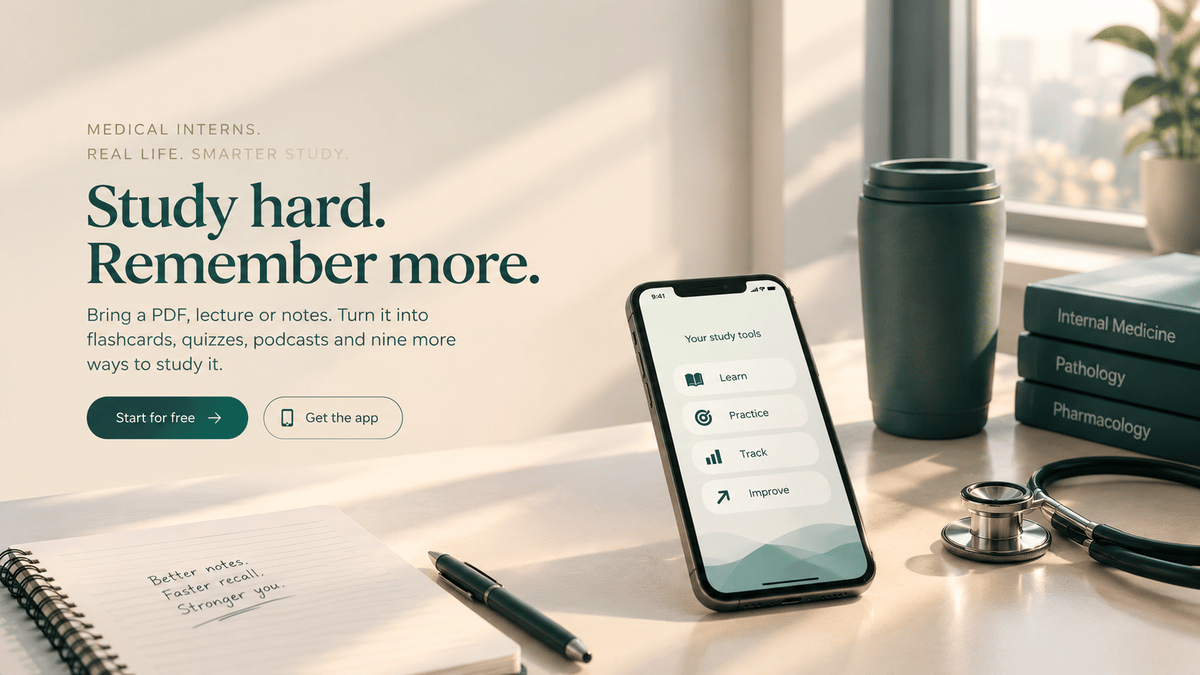
GoodOff is built around an active learning cycle: Learn → Practice → Track → Improve. It cuts out unnecessary clutter so you can focus on high-yield retention.
Bite-Sized Clinical Decks: Review key concepts in structured cards right from your phone between patient rounds.
Rapid Diagnostic Quizzes: Turn practical cases into active recall. Test your diagnostic decisions immediately instead of relying on passive reading.
Audio-Assisted Study: Turn commute times and mundane chores into useful audio review sessions.
Real-Time Progress & Focus Timers: Run focused study intervals without distractions. The dashboard monitors your streaks and accuracy automatically, showing you exactly where your knowledge gaps are.
Clinical rotations are demanding, but falling behind academically isn't inevitable. By replacing exhausting marathon study sessions with consistent micro-habits, you can handle your hospital duties and build strong clinical confidence every day.