Master your AP exams with the ultimate active learning strategy. Discover how to use spaced repetition, Pomodoro, and AI tutoring to turn study stress into a 5.
The "AP Season" is a phrase that strikes a unique kind of dread into the hearts of high school students. It’s the time of year when coffee consumption spikes, sleep schedules crumble, and the sheer volume of history dates, calculus formulas, and literary devices feels like an insurmountable mountain.
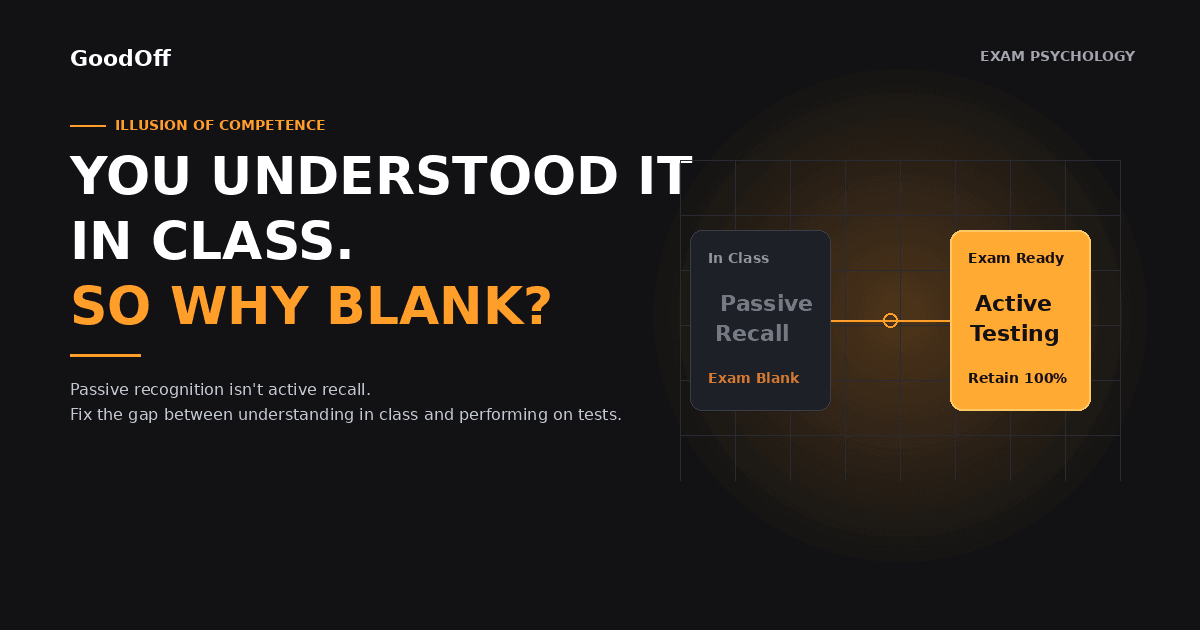
But here is the hard truth: most students study for AP exams the wrong way. They spend hours highlighting textbooks, re-reading notes, and "reviewing" until their eyes glaze over. This is passive learning, and it’s the fastest way to forget everything the moment you open the exam booklet.
If you want to move from a 3 to a 5, you don’t need more hours; you need a game changer. You need a loop that turns information into intuition.
The Problem with the "Review" Trap
When you read a chapter on the French Revolution for the fourth time, your brain recognizes the words. You feel a false sense of security called the "fluency illusion." You think you know it because it’s familiar. But recognition is not the same as recall.
AP exams don't test what you can recognize; they test what you can apply under pressure. This is where Active Learning steps in. Instead of putting information into your brain, active learning focuses on pulling it out.
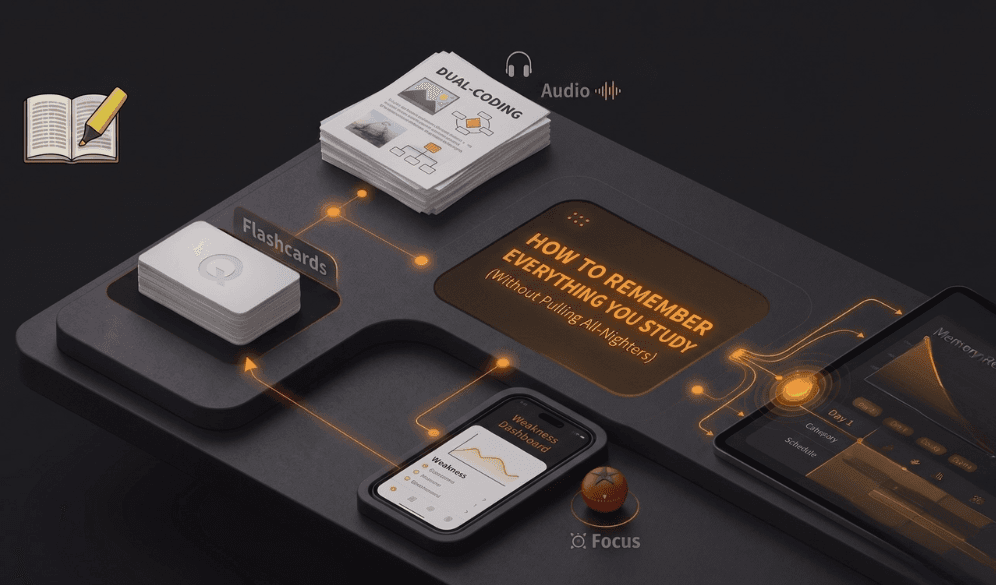
The GoodOff Loop: Learn → Practice → Track → Improve
To dominate your APs, you need to implement a feedback loop that mimics the actual exam environment. Here is how to break down your study sessions using a product-minded approach to your own brain.
1. Micro-Learning & Voice Notes
Don't try to swallow a whole unit in one sitting. Break it down into "Atomic Concepts." If you are studying AP Biology, don't just "study cells." Study "Mitochondrial ATP production."
The Game Changer: Use Voice Notes. Explain the concept out loud as if you are teaching it to a peer. If you stumble or can't find the words, you don't actually understand the concept yet. Recording these allows you to listen back during "dead time"—on the bus or at the gym—turning passive time into active reinforcement.
2. The Power of the Flashcard & Quiz Cycle
Flashcards are the bread and butter of spaced repetition. But they only work if they are challenging.
Flashcards: Use them for the "What" (Dates, Definitions, Formulas).
Quizzes: Use them for the "How" (Application, Synthesis, Logic).
By constantly quizzing yourself, you are building the neural pathways required for fast recall. Every time you struggle to remember a fact and finally get it, that memory becomes exponentially stronger.
3. The Pomodoro Protocol: Precision over Endurance
The human brain is not a marathon runner; it’s a sprinter. Studying for four hours straight is a recipe for diminishing returns.
The Pomodoro Technique—25 minutes of deep, uninterrupted focus followed by a 5-minute break—is your secret weapon. For AP prep, try the "AP Sprint":
25 Mins: Solve three past FRQs (Free Response Questions).
5 Mins: Physical movement (stretch, walk).
25 Mins: Grade your answers against the official rubric.
This keeps your intensity high and prevents the "burnout fog" that leads to careless errors.
Leveraging the AI Tutor
We live in an era where you don’t have to wait until Monday to ask your teacher a question. An AI Tutor can act as a 24/7 research agent that specializes in your weak points.
If you keep missing questions on "Elasticity" in AP Economics, don't just read the answer key. Ask the AI: "Explain price elasticity of demand using a sneaker drop analogy." Relatable context sticks better than abstract theory. Use the AI to generate practice questions that are specifically styled like the College Board’s tricky phrasing.
Analytics: The Map to Your 5
You cannot improve what you do not track. Most students have a "vibe-based" study plan: “I feel like I’m bad at Chemistry.” Vibes don't get you college credit. Data does. Keep a simple log or use a platform that tracks your accuracy over time. When you see your quiz scores in "Period 4 History" climbing from 60% to 85%, your confidence grows. More importantly, when you see "Period 6" stuck at 40%, you know exactly where to spend your next Pomodoro session.
Final Thoughts: Work Smarter, Not Just Harder
The difference between a student who survives AP season and one who thrives is the system. Stop being a passive consumer of information. Become an active producer of knowledge.
Utilize the tools at your fingertips—automated flashcards, real-time feedback, and structured focus sessions. The exams are coming, but with a loop of learning, practicing, and tracking, you aren't just taking a test; you’re showcasing your mastery.
Ready to level up? Start your first active learning loop today. Your future self (and your GPA) will thank you.