Discover how to transform passive lecture notes into high exam scores with smart revision hacks designed for 2026. Learn actionable strategies including high-yield distillation, reverse-engineered quizzing, and cognitive spacing to maximize active memory retention.
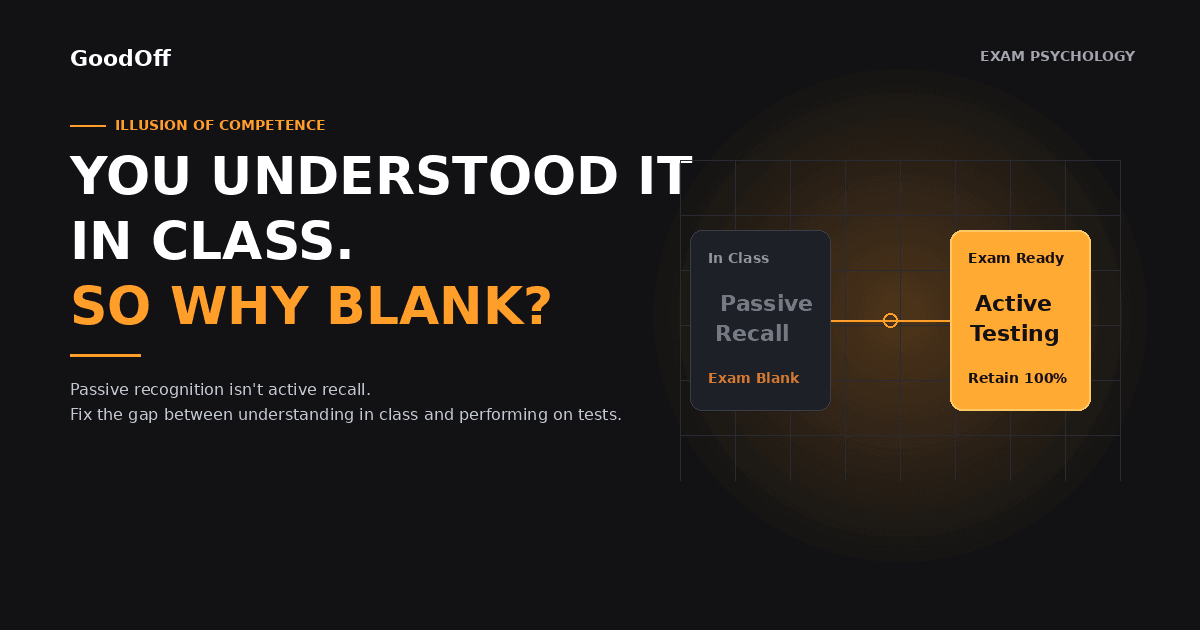
Every student has experienced the classic trap of passive revision. You sit at your desk with highlighters, opening a notebook filled with weeks of meticulously written lectures. You read through the pages, highlighting lines of text, and feel a sense of accomplishment. Yet, when the exam paper lands on your desk, your mind blanks out.
The harsh reality of academic performance is that reviewing notes is not the same as studying them. Reading is a passive activity that reassures the brain without testing it. To turn your notes into high scores, you must transform static ink on paper into an active, dynamic tool for mental retrieval.
The Forgetting Curve and the Distillation Formula
Human memory is volatile by design. According to established cognitive research, the brain discards information it deems unnecessary within forty-eight hours of acquisition. To interrupt this natural decline, your revision must introduce intentional cognitive friction.
The first step to smarter revision is effective notebook distillation. You cannot revise a semester's worth of content effectively if you are trying to reread hundreds of pages. You must condense your primary notes into high-yield summaries using these strict parameters:
The 80/20 Rule of Study Materials: Focus on the core twenty percent of the information that produces eighty percent of the academic results. Identify recurring concepts, definitions, and formulas emphasized during lectures.
The One-Page Constraint: Force yourself to compress an entire chapter or unit onto a single sheet of paper or a single digital canvas. This restriction compels your brain to categorize, prioritize, and synthesize data rather than blindly copying text.
Reverse-Engineered Quizzing
Once you have distilled your notes, stop reading them entirely. Instead, use your notes to build an active testing framework. High scorers do not look at answers; they look at questions.
Look at your existing summaries and write out a corresponding list of conceptual questions. If your notes explain the process of cellular respiration, your question list should demand an explanation of why the process fails under specific conditions.
By testing yourself before you feel entirely ready, you force your brain to search its memory banks. Even when you answer incorrectly, the cognitive effort expended to find the answer anchors the correct information deeply into your memory. You can take these active recall strategies further by inputting your custom question sets into an integrated ecosystem like the GoodOff learning and productivity platform, which converts your raw notes into structured quiz loops and tracking analytics without changing your daily study workflows.
Implementing Cognitive Spacing Systems
Massed practice, commonly known as cramming, is highly inefficient for long-term academic retention. While it might help you pass a minor quiz the next morning, it fails completely for comprehensive midterms and final exams.
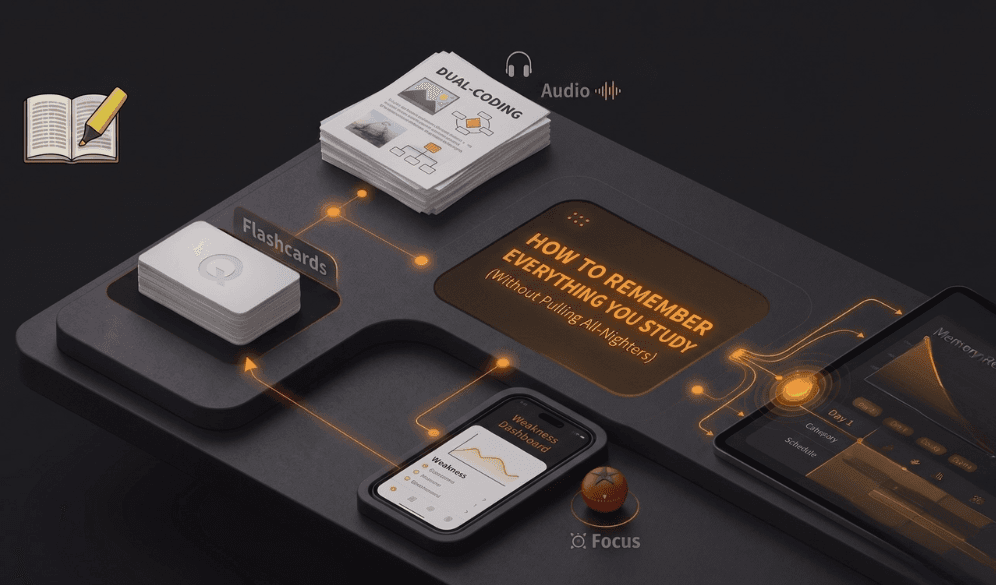
The solution lies in a structured system of spaced repetition. Instead of reviewing your biology notes for five hours straight, break your exam preparation 2026 routine down into systematic intervals across the week:
Day 1: Initial Review & Distillation (40 Minutes)
Day 3: Active Recall & Practice Quizzing (20 Minutes)
Day 7: Targeted Weakness Correction (10 Minutes)
Each time you review the material just as you are about to forget it, you strengthen the neural connections. This method ensures that the knowledge remains accessible under high-pressure exam conditions.
Optimizing Your Technical Workflow
Modern revision requires structural organization. Scatterbrained students lose precious study hours just trying to find their materials. Establish a clean, digital environment that separates your storage from your active practice.
Centralized Repository: Store all master documents, syllabus trackers, and PDFs in a single digital database.
Strict Time Management: Use focused work increments to prevent burnout. Maintain twenty-five or fifty-minute blocks of pure focus, followed by brief intervals of complete mental rest.
External Benchmarking: Never rely solely on your own interpretation of the material. Always validate your understanding against definitive, high-authority academic databases.
For verifying complex historical data, scientific formulas, or peer-reviewed literature during your note distillation phase, cross-referencing your materials with the Encyclopedia Britannica Academic Resource is a critical step to ensure your core facts are flawless before you begin memorizing them.
The Strategy for Exam Day Execution
High exam scores are the product of consistent, active systems rather than raw intelligence. When you treat your notes as a launchpad for self-testing rather than a security blanket to read passively, your retention sky-rockets.
By applying these smart revision hacks, eliminating passive reading habits, leveraging modern study workflows, and continuously testing your boundaries, you can maximize your results. The cognitive effort you invest during your daily revision sessions is exactly what transforms a chaotic pile of lecture notes into a top-tier exam performance.