The "Middle School Cliff" isn't a mystery. It’s a design flaw. Around age 11, students move from the "please the teacher" phase to the "why does this matter" phase. If your solution is more lectures or passive reading, you’ve already lost. Passive consumption is where engagement goes to die.
To fix the cliff in five minutes, you have to stop trying to be an entertainer and start being a facilitator of progress. Here is how high-performance decks solve the engagement crisis by turning learning into a measurable strike.
1. The Death of the "Wall of Text"
Middle schoolers have a low tolerance for fluff. Traditional textbooks and long-form PDFs trigger an immediate cognitive shutdown. High-performance decks force information into bite-sized, high-impact nodes. When a student flips a deck, they aren't "reading"; they are clearing an objective.
This creates a psychological "micro-win." By breaking a complex concept like algebraic expressions or cellular mitosis into a deck of twelve targeted cards, you remove the intimidation factor. You aren't asking them to climb a mountain; you’re asking them to take twelve steps. Most students will take the steps.
2. Immediate Feedback Loops
The primary reason students disengage is because they don't know if they are winning. In a standard classroom, a student might do a worksheet and wait two days for a grade. By then, the "learning moment" is cold.
Decks provide an instant feedback loop. You see the card, you recall the answer, you check the back. It’s a binary outcome: Correct or Incorrect. This mimics the dopamine loops found in gaming and social media but directs it toward academic mastery. If a student gets it wrong, they see the answer immediately. The "Learn-Practice-Track" loop ensures that the gap between "I don't know" and "I understand" is seconds, not days.
3. Active Recall vs. Recognition
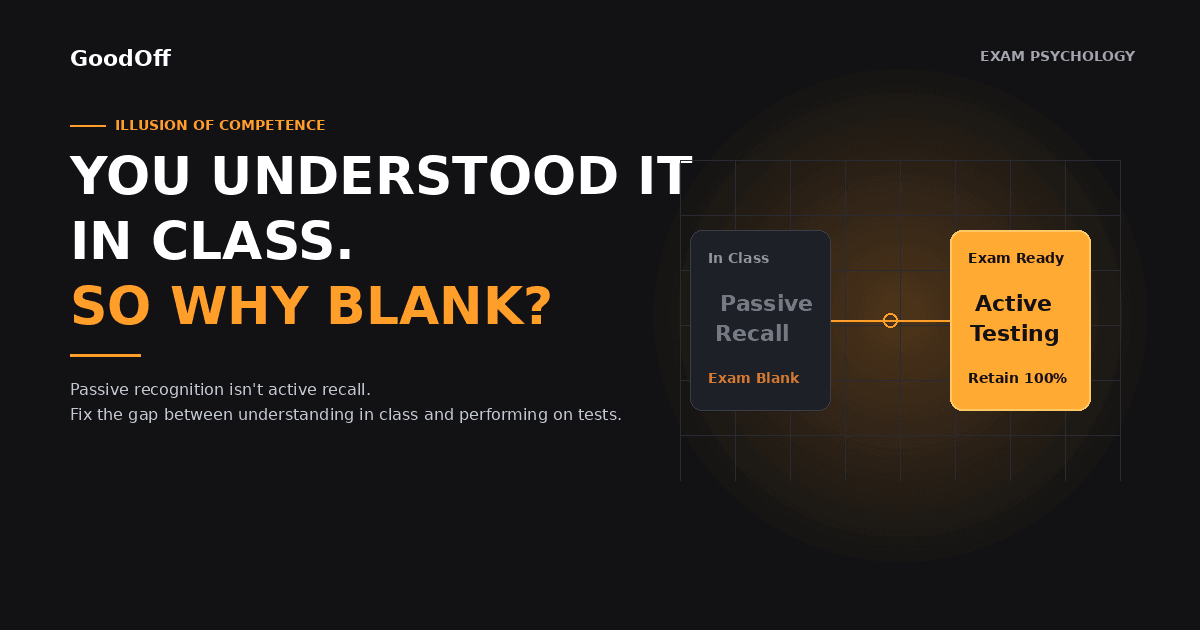
Most middle schoolers spend their time highlighting or re-reading notes. This is a waste of time. Recognition (seeing something and thinking you know it) is not the same as Recall (pulling information from your brain without prompts).
Decks force Active Recall. Every card is a demand for performance. When a student has to produce an answer before flipping the card, their brain forms stronger neural connections. It’s the difference between watching someone lift weights and lifting them yourself. Engagement stays high because the brain is actually working, not just idling.
4. Progress Analytics as Motivation
Motivation is unreliable. Systems are consistent. High-performing students aren't necessarily more "inspired"; they just like seeing their numbers go up. By integrating analytics into the deck experience, students can see their mastery percentage in real time.
When a student sees they have mastered 80 percent of a deck, the natural human instinct is to close the 20 percent gap. We use data to drive the "Improve" phase of the cycle. Seeing a "5 minutes ago" activity stamp or a streak counter provides a sense of accountability that a heavy backpack never could.
5. Practical Implementation in 5 Minutes You don't need a massive overhaul to see results.
Minute 1: Identify the core concept (The "Need to Know").
Minute 2-3: Convert that concept into 10 high-impact flashcards. No fluff. Just the raw data.
Minute 4: Have the student run the deck once.
Minute 5: Review the missed cards and check the analytics.
That is it. You have moved from passive boredom to active mastery. You have replaced the "cliff" with a ladder. If you want to keep middle schoolers engaged, stop talking at them and start giving them tools that respect their time and their intelligence.