The best study apps for college students in 2026 depend on what you need help with. Notion is strongest for organizing notes and assignments. Anki is the go-to for memorizing large amounts of material with spaced repetition. Quizlet is quick for vocabulary and shared flashcard sets. Wayground (formerly Quizizz) is mostly used for teacher-assigned quizzes. GoodOff turns your own notes, PDFs, and lectures into flashcards and quizzes with spaced repetition built in.
Below, you'll find what each app does well, where it falls short, a side-by-side table, and a simple way to choose.
How We Picked These Study Apps
Every app on this list is widely used by students and covers at least one core study job: organizing, memorizing, or testing yourself. We looked at what each app is built for, whether it helps you review on a schedule, and whether there's a free way to start. No app here is the right fit for every student, so the goal is to match the tool to the job.
1. Notion: Best for Organizing Notes and Assignments
Notion is a flexible workspace for notes, to-do lists, databases, and calendars. Many students build a semester dashboard with every class, deadline, and reading list in one place.
Good at: keeping everything organized and linked, from lecture notes to project plans.
Watch out for: a learning curve, and the temptation to spend more time designing pages than studying. Notion stores information well, but it doesn't quiz you on it.
2. Anki: Best for Memorizing Large Volumes of Material
Anki is a flashcard app built around spaced repetition. It shows each card right before you're likely to forget it, which is why it's popular with medical, law, and language students. Since version 23.10, Anki also supports the FSRS scheduling algorithm.
Good at: long-term retention of thousands of facts, plus a large library of shared decks.
Watch out for: a plain interface and the time it takes to make good cards. Anki is free on desktop, Android, and the web, while the official iPhone app is a one-time paid purchase.
Thinking of switching? Compare the best Anki alternatives by price, platforms and AI features.
3. Quizlet: Best for Quick Vocabulary Sets
Quizlet makes it easy to create flashcard sets or find sets other students have shared. It offers several study modes, including flashcards, Learn, Test, and a matching game.
Good at: fast setup and simple review for definitions and vocabulary.
Watch out for: shared sets that may contain mistakes, and some features that sit behind the paid plan.
Torn between the two? Our Anki vs Quizlet comparison puts them side by side.
4. Wayground (Formerly Quizizz): Best for Class Quizzes
Quizizz renamed itself Wayground in June 2025. It's mainly a teacher tool for quizzes, lessons, and practice, so most students use it when an instructor assigns something.
Good at: game-style quizzes with instant feedback in class.
Watch out for: it's built around teachers, so it's less suited to running your own long-term review plan.
5. GoodOff: Best for Turning Your Own Material Into Practice
GoodOff is an AI study app that starts from your course material. You upload a PDF, slides, notes, or a lecture recording, and it creates flashcards, a quiz, and a study guide you can edit. Flashcards are scheduled with FSRS spaced repetition. Sage, GoodOff's tutor, answers questions from your uploaded material and shows the page it used.
Good at: cutting the time it takes to make study material, and keeping review on a schedule. You can also import Quizlet sets, Anki decks, or CSV files.
Watch out for: AI output depends on your source, so check important cards against your notes. The free plan has a daily AI allowance, and Pro gives you a larger one.
Study Apps for College Students Compared
| App | Best for | Spaced repetition | Free option |
|---|---|---|---|
| Notion | Organizing notes, tasks, and deadlines | No | Yes, free plan |
| Anki | Memorizing large volumes of facts | Yes (including FSRS) | Free on desktop, Android, and web |
| Quizlet | Quick vocabulary and definition sets | Not its main focus | Yes, with a paid upgrade |
| Wayground | Teacher-assigned quizzes and lessons | No | Yes, for students |
| GoodOff | Turning notes, PDFs, and lectures into flashcards and quizzes | Yes (FSRS) | Yes, with a daily AI allowance |
If flashcards are your main study tool, our best flashcard app guide goes deeper on GoodOff, Anki and Quizlet.
Other Study Apps Worth Knowing
These didn't make the top five, but they solve specific problems well:
- Forest: a focus timer that grows a virtual tree while you leave your phone alone. Helpful if your phone is the main distraction.
- Obsidian: a note-taking app built around linked notes. Good for subjects where connections between ideas matter, like biology, history or philosophy.
The method matters more than the app
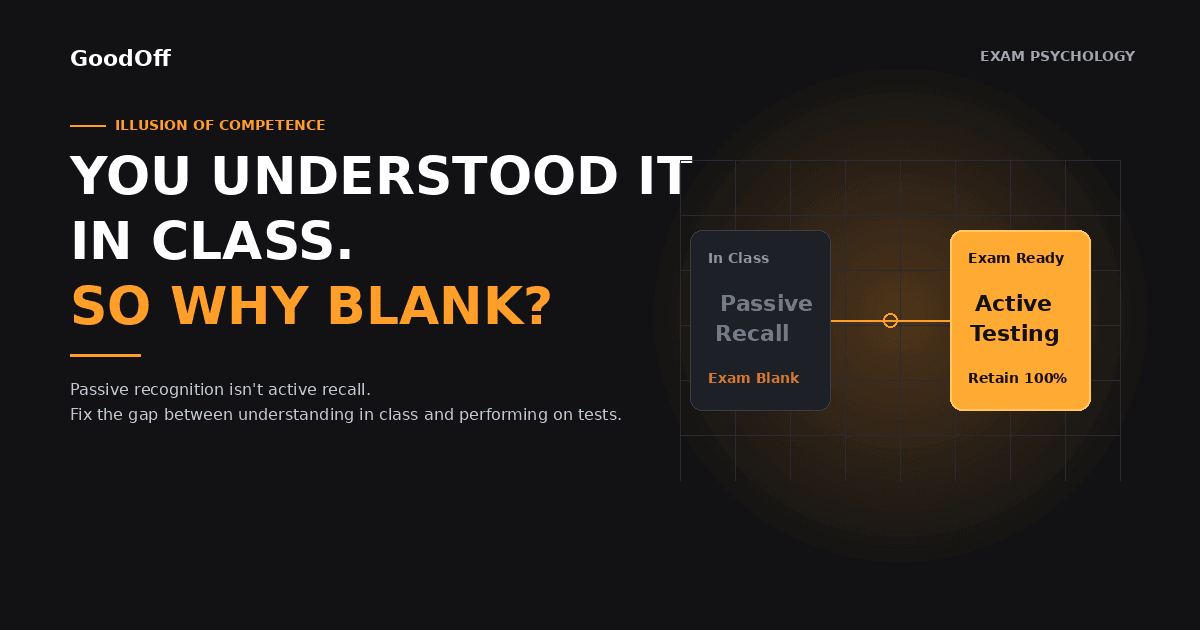
Whichever apps you choose, check that they support the two study habits with the strongest research behind them: testing yourself (active recall) and reviewing over time (spaced repetition). An app that only helps you collect and reread notes won't move your grades much on its own. See the science of spaced repetition for why.
How to Choose the Right Study App
Start with the problem you actually have, not the app with the most features.
You lose track of deadlines: start with an organizer like Notion.
You forget material after exams: use a spaced repetition app such as Anki or GoodOff. Our guide on why spaced repetition works explains the idea.
You spend hours making flashcards: try a tool that builds cards from your notes, then edit them.
You're not sure whether to go digital at all: read our comparison of digital and paper flashcards.
Whatever you choose, the app only helps if you test yourself with it. Research on quizzing yourself shows that retrieval beats rereading, no matter which tool you use.
Frequently Asked Questions
What is the best study app for college students?
There isn't one best app for everyone. Notion is strongest for organization, Anki for long-term memorization, and GoodOff for turning your own material into flashcards and quizzes. Many students use two: one to organize and one to review.
Are free study apps good enough?
Yes, for most students. Every app on this list has a free way to start. Paid plans mainly add convenience or larger AI limits.
Is Anki better than Quizlet?
For long-term memorization, Anki's spaced repetition is stronger. Quizlet is faster for quick vocabulary sets and finding shared material. See our full Quizlet vs Anki breakdown.
Should I use more than one study app?
A small stack works well, such as one app for notes and tasks and one for flashcards. More than that usually creates more setup than studying.
Try a Smarter Review Routine
Pick one class this week and move your review into a spaced repetition app. If you'd rather not make cards by hand, upload your lecture notes to GoodOff and start with a free deck built from your own material.