YouTube lectures are generous and dangerous. You can pause a world-class explanation for free. You can also watch 70 minutes, feel smart, and keep almost nothing.
Watching is not studying. If you want to study from YouTube lectures, you need a loop that creates questions, not a second screening of the same video.
Use this method for recorded class sessions, crash courses, and those “watch before lab” uploads your professor dropped in the portal.
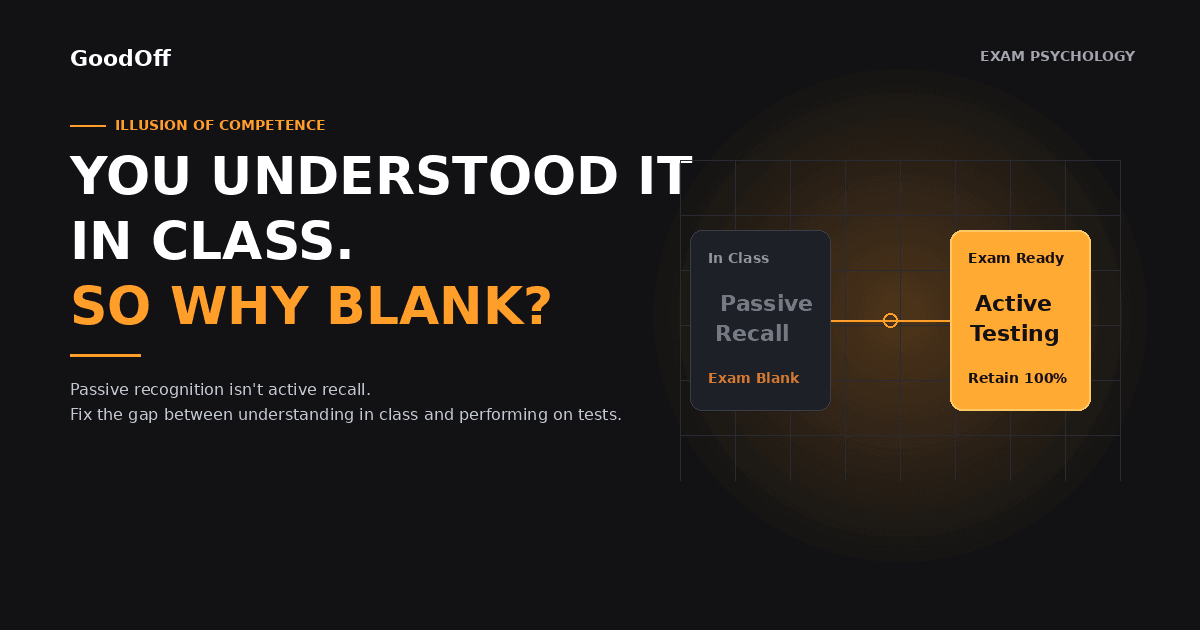
The trap: fluency from the host’s voice
A good lecturer makes ideas feel obvious while they are talking. That feeling is borrowed fluency. It evaporates when the voice stops and a blank problem set starts.
If your only note is “makes sense, rewatch later,” you scheduled another lecture, not a review. Reviews should hurt a little. You should be answering, pausing, and checking — not nodding.
Set the video up like a class, not background TV
Before play:
Pick one video or one labeled section. Not a 12-video binge.
Open a notes doc with the title, channel, and URL.
Decide the output: 10–25 flashcards or a one-page question list. If you cannot name the output, you are about to wander.
Use 1.25× if you already know the accent and the topic. Slow down for derivations and definitions.
Close other tabs. A lecture with Slack open is a podcast.
The pause-and-recall rhythm
Do not take notes in real time for the whole video. That produces a transcript with worse punctuation.
Work in 4–7 minute blocks:
Watch without writing, unless a formula appears that you must copy exactly.
Pause. Close the player or look away.
Say or write: “What was the point of that stretch, in two sentences?”
Add 1–3 questions you could fail tomorrow.
Only then jot a timestamp if the explanation was dense.
Example timestamp line: 12:40 — why we assume constant pressure; card: when does that assumption break?
If you cannot state the point, rewind 60 seconds. Do not “keep going and hope it clicks.” Hope is not a study plan.
Timestamps beat full rewatches
You will not rewatch a 90-minute lecture the night before the exam. You will also not find the one explanation you need if your notes say “mitochondria stuff ~middle.”
Write timestamps only for:
Definitions you will need verbatim.
Worked examples you want to redo with the video muted.
Moments you did not understand on the first pass.
A lecture with eight honest timestamps is more useful than a highlight reel of the entire chat.
Turn the transcript into cards, not a second essay
Many videos have captions. That is a gift and a trap. A raw transcript is a wall of speech. Do not highlight the whole thing.
Use the transcript to:
Catch a definition you misheard.
Copy a list the speaker rattled off too fast.
Jump to the sentence that matches your timestamp.
Then write cards from your questions, not from every caption line. If you upload a transcript or lecture file to GoodOff, treat the generated cards as a draft. Keep the ones that match a pause-and-recall question. Delete the ones that are just the host’s jokes turned into “facts.”
Worked examples: mute and retry
For math, physics, accounting, and anything with a board, the video is a worked solution. Steal the problem, not the performance.
Pause when the problem is stated.
Solve on paper with the video muted.
Play the solution and mark the first step you missed.
Make a card for that step: “Why do we divide by n−1 here?” not “Write the entire solution.”
If you only watch the pen move, you practiced sitting still.
A 50-minute YouTube study block
0–5: Preview the description, chapters, and your goal card count.
5–35: Two or three pause-and-recall cycles. Build questions as you go.
35–45: Convert the question list into flashcards. Split any prompt that needs a paragraph.
45–50: Immediate test. No captions, no seek bar. Fail out loud.
If the video is longer than an hour, stop at a chapter break. A finished 20-card set from half a lecture beats a half-watched epic with no cards.
What to do with the leftover confusion
YouTube comments are not office hours. If a step still fails after one rewind:
Write a card that states the confusion honestly: “I cannot yet explain why…”
Bring that card to class, a forum, or a tutor.
Do not skip ahead and collect more fog.
Confusion that is written down is study material. Confusion you skip becomes a surprise exam item.
Make the next session shorter
The second time you meet this lecture, you should not press play from 0:00. You should run the cards, then open only the timestamps you missed.
That is the whole point of studying from YouTube instead of living there. The video taught. The cards remember.