A couple of months ago, I was sitting at the kitchen table with my child, watching her complete her letter-writing homework. I was a bit shocked that a preschooler had (optional) homework, as I rarely ever gave my students homework when I was teaching. There were a few reasons for this:
I knew many students were not in a position at home to focus on homework.
I believed learning should be assessed in the classroom.
I wanted students to use their time at home for family, sports, and activities.
But as time went on, my child would get so excited to do homework. She actually enjoyed it, and I realized we were building healthy habits for learning. Something that excited her instead of overwhelming her. Watching her enjoy homework made me think deeply about how my own views on learning were formed.
Back in my senior year of high school in 2009–2010, I started thinking about the paths I wanted to take once I entered college. I had applied to a few colleges and knew I wanted to be close to home, but I was not sure what to study. I was interested in education, but everyone around me was in some type of medical field. When I told my teachers that I was interested in education, there was one common theme I kept hearing from many of them, “Don’t go into education! Everything is changing!” My response was, “If it is changing, it will be what is normal for me once I enter the education world.” Little did I know that they were right, things are always changing. But being able to adapt to those changes is what can make someone a great teacher.
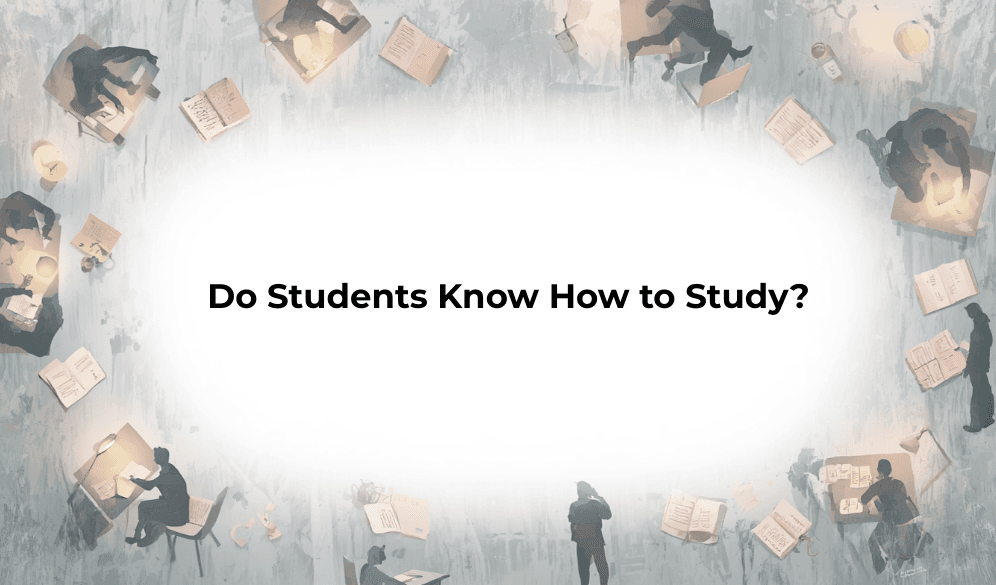
As you may have guessed, I did go into education after a few changes in college. I decided to get a middle childhood license to teach math and science. I have now been a teacher for around 10 years in America. Within those years, I have taught 5th grade, 7th grade, and 8th grade. I have taught both math and science, but mostly math. From learning how to add and subtract fractions to solving equations using the quadratic formula, I have truly enjoyed teaching math. Within my time teaching, I have seen a wide range of students by working in four different cities and through a pandemic. I have taught in public schools, independent STEM schools, and private schools. However, during my career as a teacher, I noticed many students do not know how to study.
As a new teacher, there is so much a person goes through physically and emotionally. You are learning how to balance family life and work life, you are figuring out your classroom rhythm, and you are trying to connect and know your students. On top of all of that, you do not realize that not only will you be teaching the content that your students need to learn, but you may also need to teach your students the skills they need to study a topic. I have had students fail a test, and when I asked them what they did to study, I realized they did not do anything to practice and reflect on their notes. I learned that there are a few situations you need to consider from the perspective of students:
How should a student take notes?
What does a student do with notes once out of class?
How does a student practice their notes?
What does a student do when they sit down with their book and notes so that they can review?
I have noticed many of my students coming to me, not knowing how to answer the above questions. This is where guided notes, note taking strategies, and practice resources come into play.
Education in America is not the same throughout the country. Every public school system is different, and therefore those students in that system have access to different resources and materials. There are students who have parents that completely support them through school, students whose parents have no idea what is going on, students who come to school ready to learn, and students who barely show up to class. It is because of this vast disparity in schools that teachers have to be flexible and adaptable. They also need appropriate access to resources and tools they can use to help all students succeed.
I have had a lot of access to different tools to help students learn at all different levels. Some of my favorite academic resources are Khan Academy, MathSpace, IXL, PearDeck, and more. Some of my favorite study tools are Notability, Quizlet, and GoodOff.co. Some of these tools have been able to use Artificial Intelligence (AI) in such amazing ways to help you learn and study. The two that I have recently discovered are Khan Academy’s Khanmigo and GoodOff.co. Khanmigo is a great tool for teachers trying to prepare for their classes at all levels. GoodOff.co is an AI-powered tool for students and teachers who are trying to study and test their knowledge. It can turn any notes, PDFs, or YouTube links into scrollable flashcards and quizzes using AI. These resources have the ability to change the way teachers teach and students study.
So what can we do as teachers? When AI first became popular, there was a lot of worry about how students would use it to cheat and not learn. To counter this, entrepreneurs started developing ways for people to use AI to actually help them learn. This then allowed educators to teach students how to use AI properly so that it is actually beneficial to their learning. Now in the classroom, students who feel lost have a useful way to get help when they are away from an educator.
How does this all relate back to the original question? Many students come to the classroom not knowing what to do with the knowledge being taught to them. As educators, it is our job to facilitate every student’s learning and give them the tools they need to find success. Today, there are many resources to help students learn and study. Teaching our students how to use these resources can set them up for success. We can help bridge the gap in learning for all students and give them safe spaces and resources to facilitate their learning. We, at GoodOff.co, believe we have a tool that can really help navigate this situation! It is a great resource to teach students trying to study anything. So now I ask you, what is a situation you encountered in your teaching journey that you were not prepared for? What are resources that you found very beneficial to student learning?
Keep Learning
Want to put this into practice? Read notes vs. flashcards for long-term retention and how to read a textbook and actually remember it.