Plans and features checked on October 22, 2026, on goodoff.co.
Is premium study software worth the cost? Only if the free version stops you from studying the way you need to. For GoodOff, the Free plan already covers study, review, manual decks, Anki import and most AI features within a daily allowance. Pro, at $10 a month billed yearly or $20 monthly, is worth it if you hit that daily AI limit most weeks or want Voice Tutor, video overviews and image infographics. If you don't, stay on Free.
Below is what GoodOff does, what each plan includes, and a simple test for whether paying makes sense for you.
What is GoodOff?
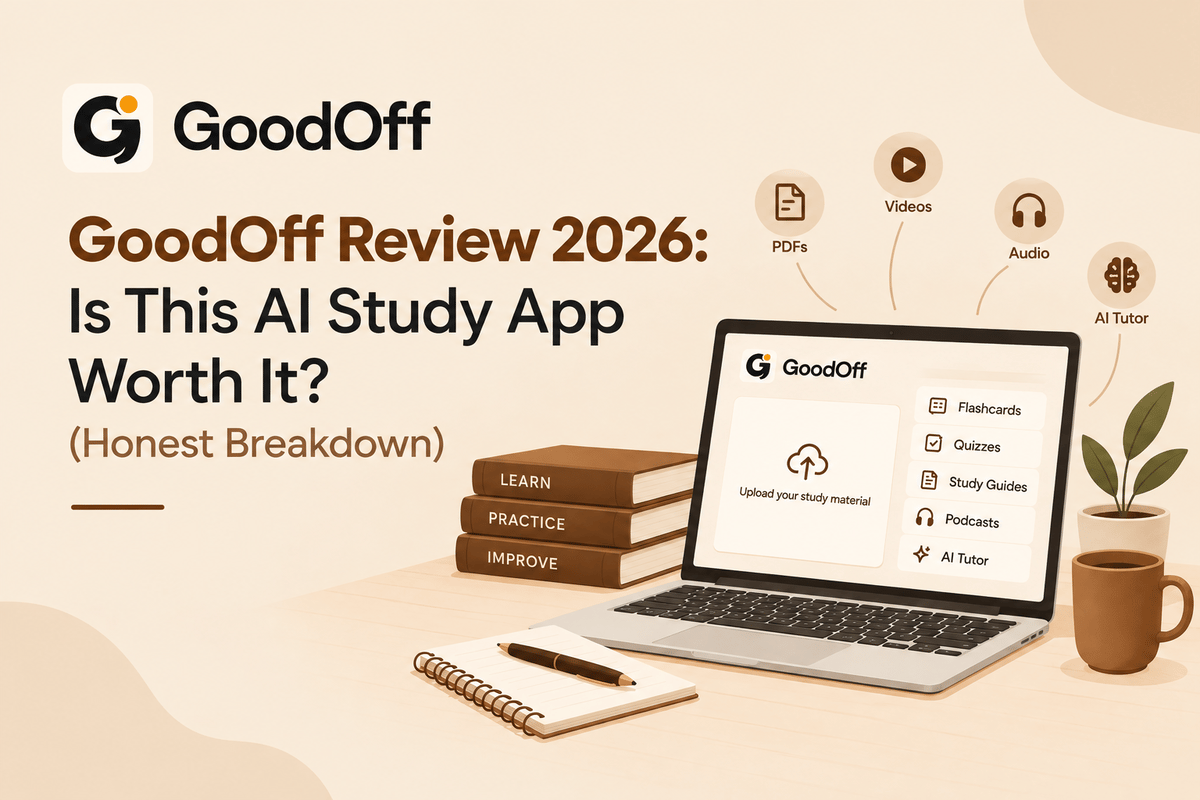
GoodOff is an AI study app. You add a source, such as a PDF, slides, notes, a photo, a web page or a lecture recording, and it turns that material into flashcards, quizzes, study guides and more. Everything stays linked to the source you uploaded.
It runs on the web, iOS and Android, and your cards and review progress sync across all three.
What GoodOff can do
Flashcards and quizzes from your own material
GoodOff drafts flashcards, a quiz and a study guide from your source, and you can edit all of them. It can also make practice exams, a two-host podcast, slides, an infographic and a FAQ from the same material.
FSRS spaced repetition
Every card is scheduled with FSRS, the Free Spaced Repetition Scheduler. You rate each card Again, Hard, Good or Easy, and FSRS decides when it comes back. It's the same scheduler Anki users can switch on, but in GoodOff it's preset.
Sage, the AI tutor
Sage answers questions from the material you uploaded and shows the page it used, so you can check the answer against your source.
Imports and study tools
You can import Anki .apkg decks, Quizlet sets and CSV files. There's also an exam planner that sizes daily sessions to your exam date, a Pomodoro focus timer, and streaks and XP to help you stay consistent.
GoodOff pricing: Free vs Pro
| Plan | Price | What you get |
|---|---|---|
| Free | $0, no card, no time limit | Study and review, decks and quizzes you make by hand, Anki import, and most AI features within a daily AI allowance that resets at 00:00 UTC |
| Pro | $10/month billed yearly ($120/year) or $20/month billed monthly | About 9 times the Free AI allowance, plus video overviews, image infographics and Voice Tutor |
Pro isn't unlimited. It has daily, weekly and monthly usage limits. Some new accounts can get a 7-day free trial of Pro on the yearly plan, but it needs a card and renews at the yearly price unless you cancel within 7 days. The monthly plan has no trial. The app confirms whether you're eligible.
Is premium study software worth the cost?
Use this test before paying for any study app, GoodOff included.
- You keep hitting the free limit. If you run out of AI generations most weeks during term, paying saves real time.
- You'd use the paid-only features. For GoodOff, that's Voice Tutor, video overviews and image infographics.
- It replaces time, not effort. Paying makes sense if it cuts hours of card-making. It won't do the reviewing for you.
- You'll still be using it in a month. Try the free plan for a couple of weeks first and see if the habit sticks.
If none of these apply, the free plan is enough. Retrieval practice and spaced review work the same whether the app is free or paid.
How GoodOff compares
- Anki: free on desktop and Android, open source and deeply customizable, but you make cards by hand or with add-ons. See GoodOff vs Anki or our list of Anki alternatives.
- Quizlet: a huge library of shared sets. Learn, Test and offline study need Plus ($35.99/year) or Plus Unlimited ($44.99/year). See GoodOff vs Quizlet and our Anki vs Quizlet comparison.
- NotebookLM: see GoodOff vs NotebookLM for how source-grounded research compares with a review routine.
Pros and cons
Pros
- Turns one source into flashcards, quizzes, a study guide and more
- FSRS scheduling with nothing to set up
- Sage answers from your notes and shows the page
- Imports Anki, Quizlet and CSV, so you don't start over
- A real free plan with no card and no time limit
Cons
- The free AI allowance is daily, so heavy study days can hit the limit
- Pro has usage limits too, so it isn't unlimited
- A much smaller shared-deck library than Anki or Quizlet
- AI output can be wrong, so check important cards against your source
Who should pay for GoodOff Pro?
Pro makes sense if you study from dense PDFs or lectures every week and keep hitting the free allowance, or if you want Voice Tutor and video overviews. Stay on Free if you study a few times a week, mostly review existing cards, or prefer making cards by hand.
Frequently asked questions
Is GoodOff free?
Yes. The Free plan needs no card and has no time limit. It includes study and review, manual decks, Anki import and most AI features within a daily allowance.
How much is GoodOff Pro?
$10 a month billed yearly ($120 a year), or $20 billed monthly.
Is paid study software worth it for college students?
It's worth it when it saves you hours each week or unlocks a feature you'll use. If the free version covers your routine, the paid plan won't make you remember more.
Does GoodOff work on Android?
Yes. GoodOff runs on iOS, Android and the web, and your progress syncs across them.
Ready to try it? Start on the free plan and upload one lecture this week.