
In the fast paced professional world of 2026, the volume of information we need to process is staggering. Many still rely on highlighting text or re reading notes, but cognitive science has proven these methods are largely ineffective for long term retention. To truly master a subject, you must move away from passive intake and embrace the power of spaced repetition and active recall.
The Problem with Passive Learning
When you read a blog post or a technical manual, you experience the "fluency illusion." Because the information is right in front of you, your brain tricks you into thinking you have mastered it. However, without testing that knowledge, the "forgetting curve" begins almost immediately. Within 48 hours, most people forget up to 80% of what they just learned.
Why Interactive Decks are the Solution
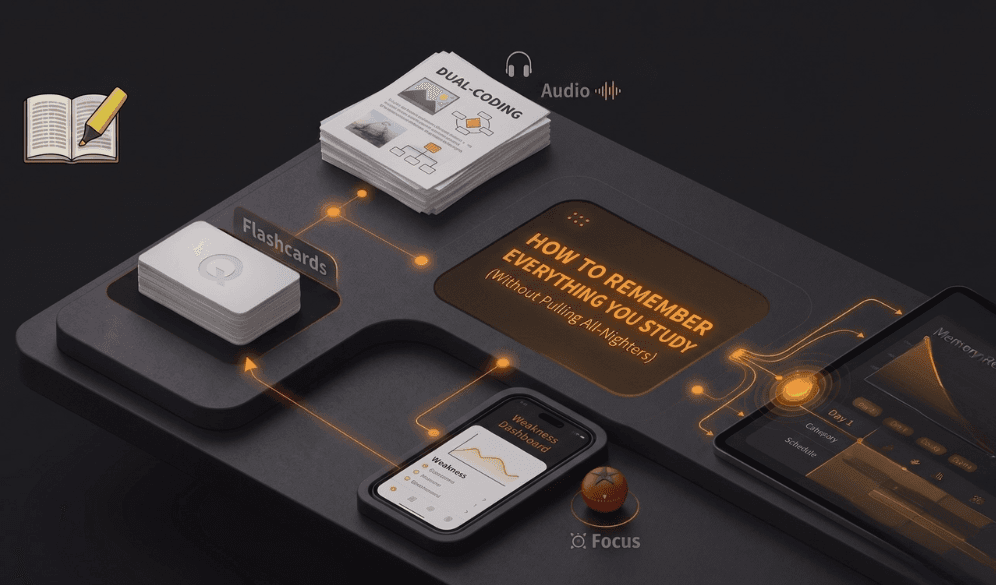
Interactive decks solve this by forcing your brain to retrieve information. Every time you flip a card or answer a quiz question, you are strengthening the neural pathways associated with that data. Modern platforms have refined this process by using algorithms that show you the most difficult material right before you are about to forget it. This maximizes efficiency, ensuring you spend less time on what you know and more time on what you don't.
Integrating Practice into the Workflow
The key to consistency is a frictionless user experience. By integrating these learning tools into a single platform with real time updates, the transition from "consuming" to "practicing" becomes seamless. When you can jump from a summary to a quiz in one click, you eliminate the mental resistance that usually leads to procrastination.
Data Driven Growth: How Real Time Analytics Fuel Personal Improvement
The difference between a hobbyist and a high performer in 2026 is the use of data. We track our steps, our sleep, and our calories, so it only makes sense that we should track our learning and productivity with the same level of precision.
From Guesswork to Precision
Traditional learning is often a shot in the dark. You study for an hour and hope for the best. With modern analytics, that guesswork disappears. Real time tracking allows you to see your "mastery score" across different topics. This data provides a clear roadmap for your next session. If your analytics show a dip in accuracy for a specific deck, you know exactly where to focus your energy during your next Pomodoro block.
The Psychological Edge of Progress Tracking
There is a profound psychological benefit to seeing your progress visualized. Human friendly feedback, such as "You've improved your recall speed by 15% since yesterday," acts as a powerful motivator. It transforms the abstract concept of "getting better" into a tangible, measurable reality. This feedback loop creates a positive reinforcement cycle that makes deep work feel rewarding rather than draining.
Building a Sustainable Habit
Analytics also help you identify patterns in your behavior. Perhaps you are most productive at 10:00 AM, or maybe your quiz scores drop after the fourth consecutive focus session. By reviewing these trends, you can optimize your schedule to match your natural energy peaks, ensuring that you are working smarter, not just harder.