Preparing for Advanced Placement (AP) exams can feel like trying to debug a million-line codebase with no documentation. You’re stressed, the stakes are high, and "edge cases" (those obscure questions from Unit 7) are everywhere.
But what if you treated your prep like a Senior QA Tester? In the world of software, we don't just hope things work; we stress-test them until they’re unbreakable. If you want to turn your study routine into a high-performance machine, it’s time to move beyond passive reading.
Here is the "game-changer" framework for AP Exam prep that will help you ship a 5 on exam day.
1. Requirements Analysis: Know the Rubric
Before a tester writes a single script, they look at the requirements. For an AP student, that means the Course and Exam Description (CED).
Identify Weighting: Don't spend 50% of your time on a unit that only makes up 5% of the exam.
Master the Task Verbs: In QA, "Verify" and "Validate" mean different things. In AP exams, "Describe," "Explain," and "Analyze" require different levels of depth. Knowing exactly what the prompt asks for is half the battle.
2. Regression Testing: Don’t Forget the Basics
You might understand the complex concepts you learned last week, but can you still solve the fundamental problems from September?
The "Spaced Repetition" Loop: Regularly revisit early units.
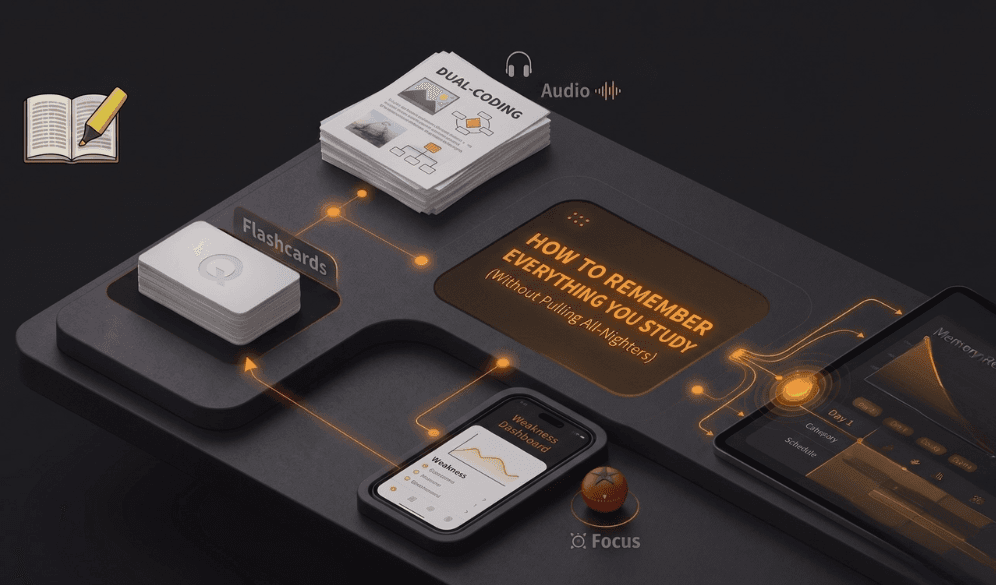
Active Learning Decks: Use digital flashcards to ensure your foundational knowledge hasn't "regressed" over the semester.
3. Load Testing: Simulate the Environment
A product might work fine for one user, but does it crash under pressure? You need to find out before the actual exam.
Timed Sprints: Set a timer for 45 minutes and do a full Free Response Question (FRQ) section.
Zero-Distraction Mode: Use Pomodoro focus tools to build your "mental endurance." If you can’t focus for 25 minutes now, you won't last three hours in the exam hall.
4. Root Cause Analysis (RCA): Why Did You Miss That?
When a tester finds a bug, they don't just fix it; they ask why it happened. When you get a practice question wrong:
Categorize the Error: Was it a "Syntax Error" (misread the question), a "Logic Error" (misunderstood the concept), or a "Data Error" (forgot the fact)?
Update Your Documentation: Keep a "Wrong Answer Journal." This is your personal patch notes to ensure you never make the same mistake twice.
5. The "Human-Friendly" Feedback Loop
QA is about making things better for the end user. In this case, the "user" is the AP Grader.
Clean UX for FRQs: Use clear handwriting, bullet points (where allowed), and underline your final answers. Make it as easy as possible for the grader to give you points.
Real-Time Analytics: Use platforms that track your progress. Seeing a "5 minutes ago" timestamp on a mastered quiz provides the psychological momentum needed to keep going.
Key Takeaways for Your AP Prep
Automate the Routine: Use tools that combine quizzes and audio learning to fill the "dead air" in your day.
Prioritize Analytics: If you can't measure your progress, you can't improve it. Use data to find your weak spots.
Stay Agile: If a study method isn't working, "pivot." Don't stick to a bad plan just because you started it.
Final Verdict: Treat your brain like a high-end application. Test it early, test it often, and focus on the "Practice → Track → Improve" loop. See you on the leaderboard.