Short answer: stop rereading because it feels like learning without producing much of it. Swap it for active learning: close the book and try to recall the material, answer practice questions, explain it aloud, and then check what you missed. These methods feel harder, and that's the point. In a widely cited 2013 review of ten study techniques, Dunlosky and colleagues rated practice testing and distributed practice as high utility, and rereading and highlighting as low utility.
Every student knows the scene. You spend three hours with a textbook, highlight half the page and feel productive. Then you close it, try to explain what you read, and draw a blank. This guide explains why that happens and gives you seven active methods to use instead, with a simple weekly routine.
The Quick Version
- Rereading builds familiarity, not recall. Familiar text feels known even when it isn't.
- Test yourself before you check. Retrieve first, then look.
- Use one active method per session and finish with a short self-quiz.
- Track what you miss, and spend your next session there.
Why Rereading Feels Like Studying
When you read a chapter for the third time, the words look familiar and your brain says "I know this." Psychologists call this the illusion of competence. Recognizing an idea on the page is not the same as producing it from memory, and exams usually ask for the second thing.
The research backs this up. In Roediger and Karpicke's 2006 study, students who read a passage once and then practiced recalling it three times remembered about 61% of the ideas a week later. Students who read it four times remembered about 40%. The rereaders did feel more confident, but they remembered less.
Dunlosky and colleagues (2013, Psychological Science in the Public Interest) reviewed ten common learning techniques. They rated practice testing and distributed practice as high utility. Summarization, highlighting and rereading were rated low utility, because the evidence for them was weaker or limited to certain conditions.
Passive vs Active: A Quick Comparison
| Passive habit | Active swap | Why it works better |
|---|---|---|
| Rereading the chapter | Close the book and write what you remember | Forces retrieval, which strengthens memory |
| Highlighting | Turn each heading into a question and answer it | Makes you process meaning, not color |
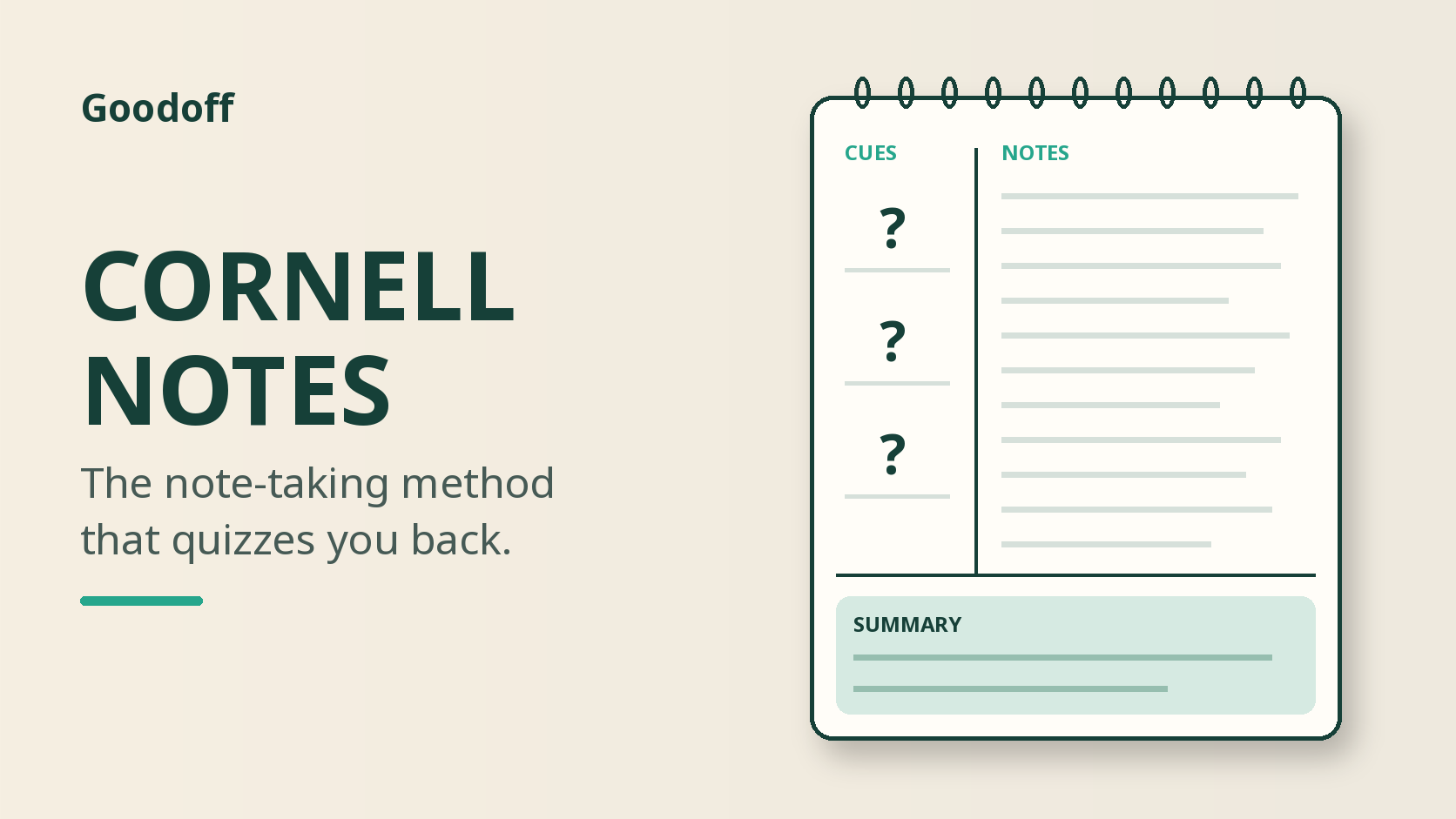
| Copying notes | Rewrite them as questions | Notes become a test, not a transcript |
| Watching a lecture again | Pause and predict the next step | Keeps you producing, not just receiving |
| Summaries only | Summary from memory, then compare | Reveals gaps right away |
7 Active Learning Methods to Try
1. Blurt it out
After reading a section, close the book and write everything you can remember. Then check what you missed. The blurting method turns this into a routine.
2. Turn headings into questions
Before you read a section, change its heading into a question ("How does the Krebs cycle make ATP?"). Read to answer it, then answer it aloud without looking.
3. Make flashcards from your notes
Write a question on the front and a short answer on the back. Keep each card to one idea. When you review, say the answer before you flip the card.
4. Do practice questions
Past papers, end-of-chapter problems and quizzes show what you can actually do. If you get one wrong, write the correct reasoning in your own words.
5. Teach it to an empty room
Explain a topic aloud as if to a classmate. Where you stumble is where you don't understand it yet. Our guide to the Feynman Technique covers this method.
6. Rewrite notes, don't copy them
Copying notes word for word has the same weakness as rereading. We explain why copy-paste notes don't help you remember and what to do instead.
7. Mix problem types
If you always practice one type of problem at a time, try shuffling them. Our interleaving study technique guide shows how to build a mixed practice set.
The Active Study Loop
You can wrap any of these methods in a simple four-step loop: learn, practice, track and improve.
- Learn: read or watch a short section, around 15 to 30 minutes.
- Practice: close the material and test yourself right away.
- Track: mark what you missed, even with a simple tally.
- Improve: start the next session with the missed items, not the easy ones.
This loop keeps you from spending time on what you already know. It's also a good way to see that you're improving, which helps motivation.
A Sample Week
| Day | Session (30 to 45 minutes) | Active method |
|---|---|---|
| Monday | New chapter | Headings into questions, then blurt |
| Tuesday | Chapter notes | Make 15 to 20 flashcards |
| Wednesday | Practice problems | 10 questions, mark errors |
| Thursday | Weak spots | Redo missed items from memory |
| Friday | Mixed review | Shuffled quiz from the week |
| Weekend | Teach it | Explain the week's topics aloud |
Adjust the times to your courses. The pattern matters more than the exact schedule.
Mixing Formats Without Losing Focus
Active study takes more energy than scanning a page, so vary your formats. Listening to material on a walk, recording yourself explaining a concept, or switching between cards and problems can keep your mind engaged. Short, focused sessions with a clear task work better than a long session with no plan. For a closer look at long study days, see how successful students study.
Common Mistakes
- Peeking too soon. Struggle for a minute before you check the answer.
- Making cards too big. One idea per card keeps reviews fast and clear.
- Only practicing what you know. It feels good, but it doesn't help your weak spots.
- Skipping feedback. A test you never check teaches you very little.
- Giving up after one hard session. Effortful recall feels slower at first because you're doing the work.
Where GoodOff Fits
GoodOff can turn your own notes, PDFs and slides into flashcards, quizzes and study guides, so you start with questions instead of a page to reread. Quizzes include explanations, so you can see why an answer works. The free plan includes AI decks, quizzes, study guides and FAQs with daily, weekly and monthly limits, and its analytics show study time, cards reviewed and accuracy trends so you can pick what to review next.
It's a tool for the practice step, not a replacement for it. You still have to try to answer before you look.
Frequently Asked Questions
Is rereading ever useful?
A single careful read is a fine first step, especially for new material. The problem is relying on repeated rereading as your main way to review. Follow a first read with recall practice.
What is active learning?
Active learning means doing something with the material instead of just receiving it, such as answering questions, explaining ideas, solving problems or recalling information without notes.
Why does active recall feel harder?
Because it is harder. You're pulling information from memory instead of recognizing it on a page. That effort is what makes the memory stronger.
How long should an active study session be?
Many students do well with 30 to 45 minutes on one clear task, then a short break. Choose a length you can repeat on most days.
Can I use active learning for any subject?
Yes. For math and science, do problems and explain the steps. For humanities, outline arguments from memory. For languages, practice producing words, not just recognizing them.
Close the Book Tonight
Pick the last thing you read and try to write five things you remember before you look back. Check, fix and note what you missed. If you want questions made from your own notes, you can create a quiz with GoodOff and use it for your next recall session.