To overcome math anxiety, change how you practice. Cover worked solutions and solve problems from scratch, mix problem types, review formulas with spaced repetition, explain steps out loud, and track your progress so you can see it improving. Math anxiety is real and common, but it is usually a response to how math has been studied and tested, not proof that you're "bad at math."
What Is Math Anxiety?
Math anxiety is tension and fear that shows up when you have to do math, especially under time pressure. Your palms sweat, the page goes blank, and even simple steps feel hard. Research by Mark Ashcraft and others links math anxiety to reduced working memory during problem solving. Worry takes up the mental space you need to hold numbers and steps in your head, so you perform below what you actually know.
The Study Habit That Makes It Worse: Solution-Peeking
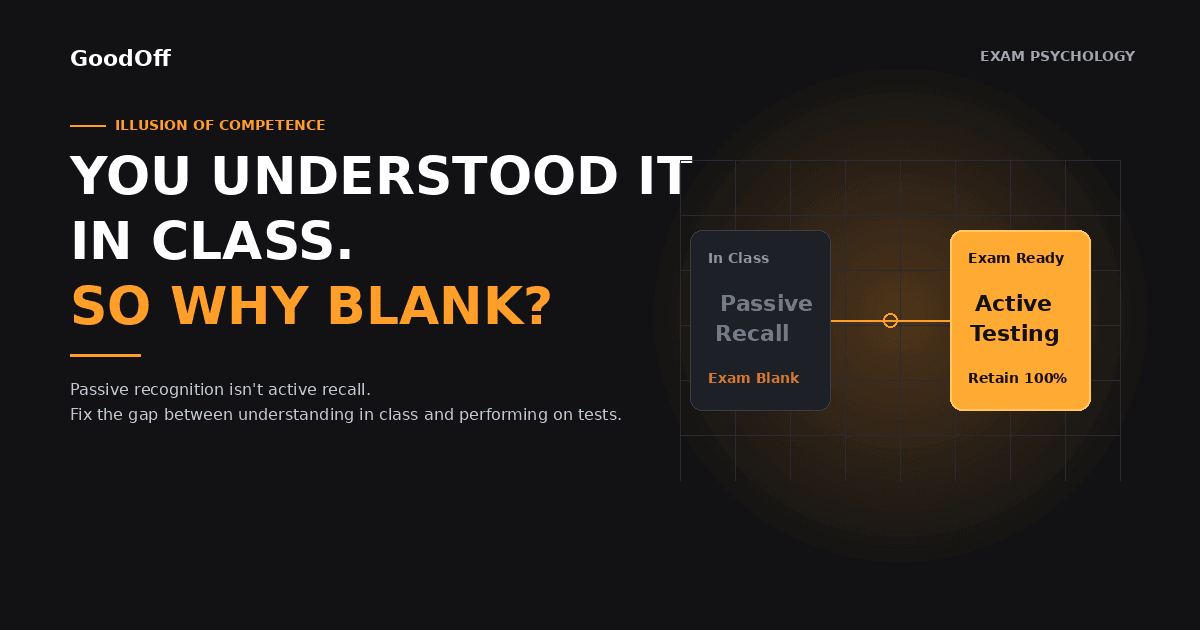
Many students study math by reading a solved example, nodding along, and moving on. Or they try a problem for 30 seconds, get stuck and look at the answer. Both create an illusion of competence. You learned to follow someone else's logic, not to produce your own. On exam day the solution isn't there to follow, and that gap feels like panic.
5 Active Learning Techniques for Math Anxiety
1. Solve from scratch, not from the example
Look at the problem only and cover the solution. Try it fully on your own. If you get stuck, uncover just the step where you failed, cover it again and keep going. Then redo the whole problem later without help. This builds the exact skill the test asks for.
2. Explain it out loud (the Feynman technique)
Teach the concept to a friend, a whiteboard or an empty room. Explain why each step works, not just what it is. When you stumble or reach for jargon, you've found the gap to study. Our guide to the Feynman technique walks through it.
3. Review formulas with spaced repetition
Forgetting last week's formulas while learning this week's is a big source of math stress. Put formulas and key steps on flashcards and review them at growing intervals, such as 3 days, then 7, then 14. When formulas are automatic, your working memory is free for the actual problem. See the science of spaced repetition.
4. Mix problem types (interleaving)
Doing 30 problems of one type tells you the method before you start. Exams don't. Once you know a few topics, shuffle problems from different chapters so you first have to decide which method fits. Research by Doug Rohrer and Kelli Taylor found that students who practiced math problems mixed together did much better on a later test than students who practiced them in blocks. More in our post on interleaving practice.
5. Track your progress
Anxiety grows when you can't tell whether you're improving. Keep a simple log of problems attempted, accuracy, and which types take you longest. Seeing accuracy rise and time per problem drop week by week is strong evidence against the "I can't do math" story.
Calm Moves for the Test Itself
- Write down formulas first when you're allowed to, so you don't have to hold them in your head.
- Write out your worries before the test. A 2011 study by Gerardo Ramirez and Sian Beilock found that a short writing exercise about test worries helped anxious students perform better.
- Start with a problem you can solve to build momentum.
- Breathe out slowly a few times if your mind goes blank, then reread the question.
For more on handling exam nerves in any subject, see how to overcome test anxiety.
How GoodOff Helps
GoodOff turns your math notes or problem sets into flashcards and quizzes, schedules formula cards with FSRS, and shows accuracy and progress over time in analytics. When you get stuck on a concept, you can ask Sage, GoodOff's AI tutor, to explain it from your own material.
Frequently Asked Questions
Is math anxiety real?
Yes. It's a well-studied response that can lower performance by taking up working memory. It's also very common and can be reduced with practice.
How do I stop freezing on math tests?
Practice solving problems from scratch under time limits, write key formulas down at the start, and begin with a problem you know how to do.
Does practice reduce math anxiety?
The right kind does. Active practice that builds real skill and shows you measurable progress reduces the uncertainty that feeds anxiety.
Should I memorize math formulas?
Yes, alongside understanding them. Formulas you know automatically leave more mental space for solving the problem.
Start With Five Problems
Pick five problems from your last homework, cover the solutions and solve them from scratch. Mark the ones you got stuck on and try them again in three days. That's the whole method, repeated.