In an era where information overload is the default state, the ability to transform passive consumption into active mastery is the ultimate competitive advantage. For professionals and students alike, the traditional "read and remember" approach is failing. As we move through 2026, the most successful individuals are those adopting a structured learning loop: Learn, Practice, Track, and Improve. This systematic approach, central to the GoodOff philosophy, is not just a trend but a fundamental shift in how we approach personal and professional growth.
The Evolution of Digital Learning and Productivity
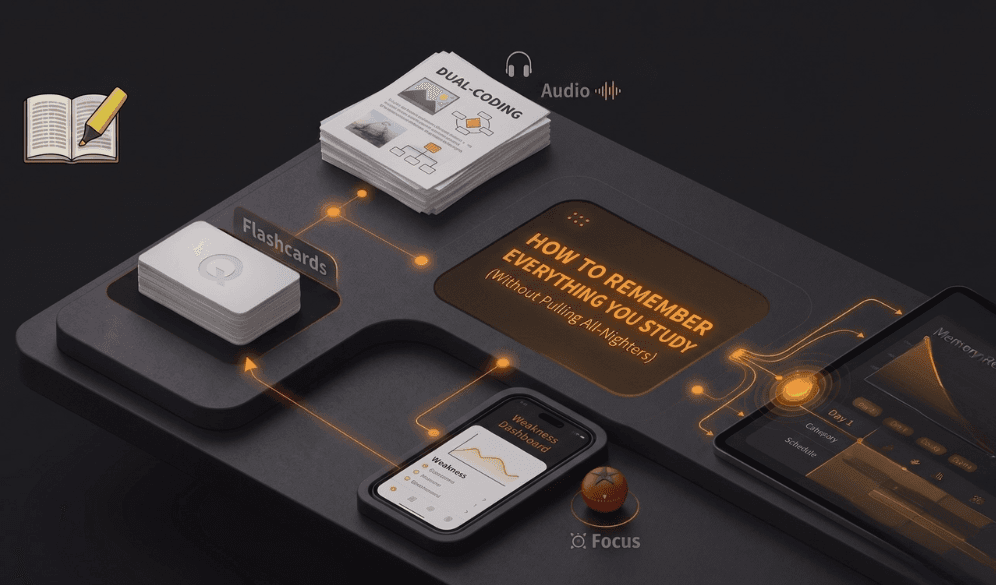
The digital landscape has moved beyond static PDF guides and hour long video lectures. Today, the focus is on microlearning and just in time knowledge. This shift is driven by the realization that our brains are wired for small, frequent bursts of engagement rather than marathon study sessions. High performance platforms now integrate tools like flashcard decks, interactive quizzes, and Pomodoro timers to create a seamless ecosystem where learning feels like a natural part of the daily workflow.
By breaking down complex subjects into bite sized modules, learners can maintain high levels of focus without the burnout associated with traditional methods. This is particularly effective when combined with audio learning, allowing users to absorb key concepts during commutes or exercise, effectively reclaiming "dead time" for personal development.
The Power of the Learn Practice Loop
The first half of the high performance loop is the transition from learning to practice. Passive learning simply reading or watching only encodes information in short term memory. To move knowledge into long term storage, you must engage in active recall and spaced repetition.
Flashcards and quizzes are the heavy hitters of this phase. When you test yourself, you are forcing your brain to retrieve information, which strengthens neural pathways. This "desirable difficulty" is what separates those who understand a concept from those who can apply it. The beauty of a modern productivity platform is the ability to flip between a learning module and a practice deck instantly, ensuring that the gap between theory and application is as small as possible.
Tracking for Continuous Improvement
You cannot improve what you do not measure. This is where the "Track" and "Improve" phases of the loop become critical. In 2026, analytics are no longer just for data scientists; they are essential tools for every learner. Detailed progress tracking allows you to see exactly where your knowledge gaps lie.
Are you consistently failing a specific set of questions in your quiz? Does your focus dip during the third Pomodoro cycle? Real time analytics provide the feedback necessary to adjust your strategy. Instead of generalized studying, you can move toward "precision learning," where every minute spent is targeted at your weakest points. This data driven approach ensures that your effort yields the highest possible return on investment.
Productivity Tools for the Modern Professional
Beyond learning, the modern productivity stack must include robust focus tools. The Pomodoro technique remains a gold standard for a reason: it aligns with our natural attention spans. By working in 25 minute sprints followed by short breaks, you maintain a steady cognitive load without hitting a wall of exhaustion.
Integrating these timers directly into your learning environment creates a "flow state" ecosystem. When your deck, your quiz, and your focus timer all live in one clean, distraction free interface, the friction of starting a task vanishes. For the product minded individual, this UX centric approach is the key to consistency.
The Human Side of Tech: UX and Feedback
While the underlying data is complex, the user experience must be simple and human. In 2026, users demand real time updates and friendly, relatable feedback. Seeing that a friend completed a deck "5 minutes ago" or receiving a "human friendly" encouragement after a tough quiz creates a sense of community and momentum. A clean, minimalist UI is not just an aesthetic choice; it is a productivity feature that reduces cognitive load and keeps the focus on the content.
Why the GoodOff Model Works
The GoodOff model succeeds because it treats productivity and learning as two sides of the same coin. By combining the "Learn Practice" cycle with "Track Improve" analytics, it creates a self sustaining engine for growth. This loop ensures that every piece of information learned is practiced, every practice session is tracked, and every data point is used to improve the next cycle.
As we look toward the future of work and education, the tools we use will define our success. Those who embrace integrated, data driven platforms will find themselves ahead of the curve, mastering new skills with speed and precision while maintaining the mental clarity needed for long term success.