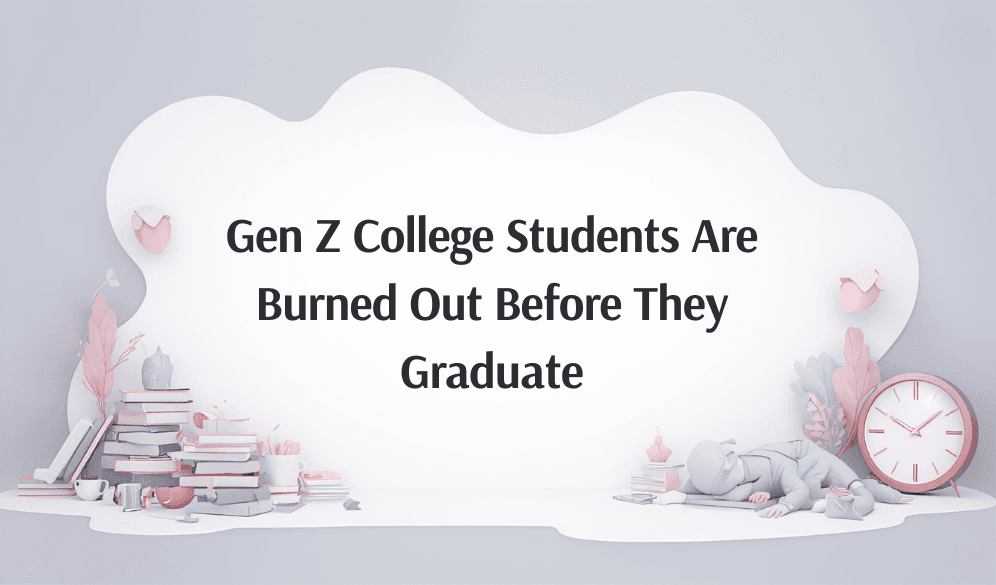
Why is Gen Z entering the workforce already exhausted? Explore the unique pressures driving Gen Z college student burnout before graduation. There used to be a predictable timeline for career exhaustion: graduate college, enter the corporate world, climb the ladder for a decade, and then experience the classic mid-career crash.
In 2026, that timeline has completely shattered.
Members of Generation Z are walking across graduation stages into their first entry-level positions already operating on empty. Gen Z college student burnout is no longer just a finals-week phenomenon; it is a chronic, systemic condition that peaks before the diploma is even printed.
According to young adult behavioral health data, today's undergraduates are reporting levels of psychological exhaustion and academic fatigue that match or exceed those of seasoned, mid-career professionals. Gen Z isn't lazy they are running a marathon at a sprinter's pace, forced to navigate a hyper-optimized educational system that treats teenagers like corporate entities.
To understand why this generation is entering adulthood completely drained, we have to look at the modern, exhausting expectations rewriting the college experience.
1. The Death of the "Entry-Level" Job
The single largest driver of pre-graduation burnout is the unprecedented pressure of the modern job market. The concept of an "entry-level" role that teaches you the ropes on the job is largely a thing of the past.
[ Traditional Path ] ──► Graduate ──► Entry-Level Job ──► Experience
[ Modern Gen Z Path ] ──► 3 Internships + Portfolio + Network ──► Graduate ──► Entry-Level?
In the current economic climate, landing a starting position requires a portfolio that looks like a mid-career resume. Students feel immense pressure to secure multiple corporate internships, lead campus organizations, and maintain a pristine GPA simultaneously. This intense corporate readiness stress means that college is no longer a space for intellectual exploration it has been transformed into a high-stakes, four-year corporate vetting process.
2. Professional Hustle Culture on Campus
Because the job market is incredibly competitive, a toxic strain of "hustle culture" has deeply embedded itself into campus life.
Students are constantly bombarded with messaging telling them to optimize every waking hour. On social platforms like LinkedIn and TikTok, peers share highly stylized updates about their 5:00 AM routines, tech fellowships, and side hustles. This constant exposure creates an agonizing internal narrative: “If I am just resting or hanging out with friends, I am actively falling behind my competition.” This mindset erases the natural boundaries of youth, turning personal downtime into an administrative failure.
3. The Digital Extraction of Mental Stamina
Gen Z is the first generation to navigate higher education through an entirely digitized pipeline. While technology offers unparalleled convenience, its structural impact on student mental stamina is devastating.
Constant Accessibility: Coursework portals, real-time grading notifications, and group project channels stream directly to smartphones 24/7.
The Invisible Workday: Because assignments can be submitted at 11:59 PM from a dorm bed, the academic workday never truly ends.
Cognitive Fragmentation: Constantly switching between social feeds, homework notifications, and career networking apps leaves the nervous system in a state of perpetual hyper-vigilance.
The Core Forces Driving Pre-Graduation Burnout
The Market Demand: Radical inflation of entry-level job requirements, forcing students to work like professionals before they graduate.
The Social Climate: Campus professional hustle culture turning casual peer relationships into competitive networking opportunities.
The Digital Reality: Seamless, 24/7 connectivity completely dissolving the boundary between academic obligations and personal recovery.
4. The Systemic Care Deficit
When students recognize that they are hitting a wall of profound exhaustion, they naturally look to their institutions for relief. However, the available support systems are largely inadequate for handling structural burnout.
Most university wellness programs rely heavily on superficial solutions: a temporary wellness day, a free meditation app subscription, or a flyer about time management. These interventions treat burnout as an individual time-management mistake rather than a logical reaction to a hyper-demanding environment. When students seek clinical help, they are frequently met with understaffed counseling facilities, reinforcing the feeling that they must carry the weight entirely alone.
"We are asking 20-year-olds to possess the emotional resilience of a seasoned executive, the resume of a mid-career professional, and the flawless optimism of a campus brochure. It is a deeply unsustainable expectation."
How to Protect Your Stamina Before Graduation
If you are currently a student feeling completely drained by the endless demands of your calendar, you must consciously de-escalate the pressure before you step into the workforce:
Enforce a "LinkedIn Detox": Professional networking platforms are highly curated highlight reels designed to induce career anxiety. Limit your consumption of peer success updates to just once or twice a week, treating it strictly as a utility rather than a casual social feed.
Establish an Absolute "Off-Clock" Window: Treat your weekends or your late evenings as completely non-negotiable recovery zones. Close your coursework apps, put your phone on "Do Not Disturb," and give your brain a definitive break from the constant pressure of production.
Redefine Entry-Level Expectations: You do not need to be a fully formed industry expert by the time you graduate. Focus on building solid core skills and a few genuine professional connections, rather than collecting an exhausting amount of titles and side projects.
Your value as a human being is not tied to your productivity, your resume, or your future job title. Graduating with your mental health intact is an infinitely greater achievement than graduating with a flawless portfolio at the expense of your well-being. Give yourself permission to slow down your career is a marathon, not a sprint.