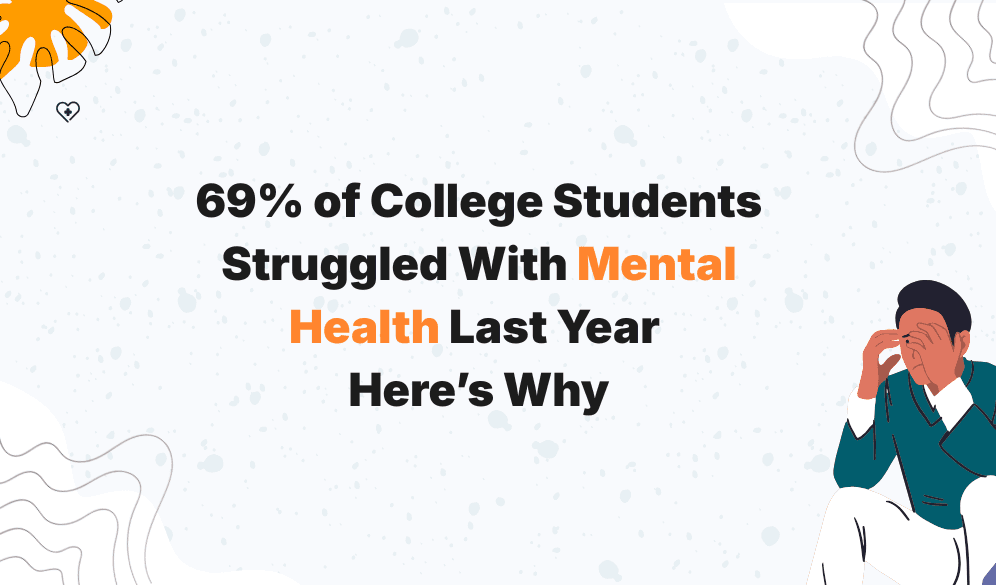
According to United Healthcare’s 2026 Young Adult & College Student Behavioural Health Report, 69% of college students reported experiencing a mental or behavioural health concern in the past year the highest rate in the four years the survey has been conducted.
This number is significantly higher than for young adults not in college, highlighting how the college environment uniquely intensifies mental health struggles.
While the Healthy Minds Study (2024–2025) shows some improvement in severe depression and anxiety rates, the overall picture remains concerning. Here’s a breakdown of why so many students are struggling.
Top Reasons Behind the 69%
Academic Pressure & Performance Anxiety College is intensely competitive. Students face heavy workloads, exams, assignments, internships, and the pressure to maintain high GPAs for jobs or graduate school. Many feel they’re constantly being evaluated. This constant stress often leads to burnout.
Financial Stress Rising tuition, student debt, housing costs, and living expenses create constant worry. Many students work part-time jobs while studying, leaving little time for rest or social life. Financial insecurity is one of the strongest predictors of poor mental health.
Loneliness & Social Challenges Transitioning to college often means leaving behind family and high school friends. Building new connections can be difficult. Social media makes it worse by creating FOMO (fear of missing out) and unrealistic comparisons. About 1 in 4 students report feeling isolated.
Sleep Deprivation Late-night studying, irregular schedules, screen time, and partying disrupt sleep. Poor sleep directly fuels anxiety, depression, and difficulty concentrating.
Social Media & Comparison Culture Constant exposure to curated “perfect” lives increases feelings of inadequacy, anxiety, and depression.
Identity Formation & Uncertainty College is a time of major life transition figuring out who you are, what you want to do, and navigating relationships, sexuality, and future career paths. This uncertainty can feel overwhelming.
Post-Pandemic Effects Many students still carry the emotional scars of disrupted education, isolation, and uncertainty from COVID-19 years.
Other Contributing Factors
Relationship issues and breakups
Discrimination (especially for LGBTQ+, minority, and international students)
Substance use
Fear about AI taking future jobs and economic instability
The Perception Gap
Parents often underestimate the problem. In the same UnitedHealthcare survey, only 43% of parents believed their college student was struggling with mental health a huge disconnect.
The Good News
Some indicators are improving:
Moderate to severe depression dropped to 37% (from higher peaks)
Severe depression at 18%
Suicidal ideation at 11%
More students are also seeking help, and stigma around mental health is slowly decreasing.
What Can Be Done?
For Students: Prioritize sleep, exercise, limit social media, talk to someone (friend, counselor, hotline), and use campus resources.
For Colleges: Expand counseling services, reduce wait times, offer mental health days, and integrate wellness into academics.
For Parents: Keep communication open without judgment.
Mental health struggles in college are incredibly common you’re not weak, broken, or alone if you’re facing them. The 69% statistic proves this is a systemic issue, not an individual failure.
If you’re struggling right now, reach out. Your campus counseling center, a trusted professor, or a hotline like 988 (US) can be a good starting point. Small steps can make a big difference.