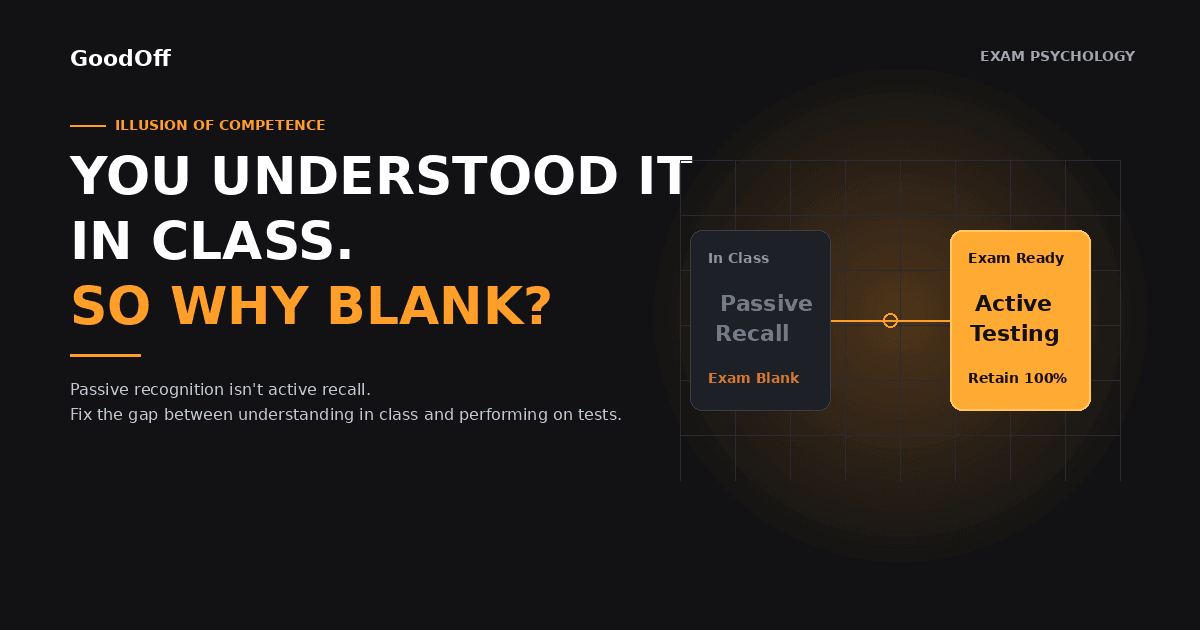
Studying smarter, not harder, means getting more learning out of each hour instead of adding more hours. Long sessions often backfire because focus drops, tired brains learn less, and most of the extra time goes into passive rereading. Short, focused sessions built around self-testing and spaced review usually beat marathon study nights.
Below, you'll learn why longer study hours stop paying off and seven practical ways to study smarter instead.
Why Studying Longer Often Backfires
Hours at a desk are easy to count, so they feel like the right measure of effort. But time spent and learning gained are not the same thing.
Attention fades. After a long stretch without a break, you may still be reading, but less of it is going in.
Passive methods fill the time. Long sessions tend to drift into rereading and highlighting, which feel productive but do little for recall.
Sleep gets cut. Late-night marathons often cost sleep, and sleep is when the brain strengthens new memories.
Burnout builds. Exhausting sessions make it harder to start again the next day, so consistency suffers.
What Research Says About Effective Study Methods
A widely cited 2013 review led by John Dunlosky rated ten common study techniques. Practice testing and spreading study out over time (distributed practice) were rated as highly useful. Rereading and highlighting, two of the most popular habits, were rated low. In other words, the methods students use most often are not the ones that work best.
7 Ways to Study Smarter, Not Harder
1. Test yourself instead of rereading
Close your notes and try to answer questions from memory. Use flashcards, practice questions, or a blank page. Every recall attempt strengthens the memory more than another read-through.
2. Space out your reviews
Review material over several days instead of all at once. Our guide to spaced repetition shows how to plan the gaps.
3. Work in short, focused blocks
Try 25 to 50 minutes of focused work followed by a short break. Put your phone in another room and work on one task per block.
4. Mix related topics
When practicing problems, mix different types instead of doing twenty of the same kind in a row. This is called interleaving, and it helps you learn to pick the right method on an exam.
5. Plan backward from the exam date
Divide the material across the days you have left, with review built in. Our 7-day exam study plan walks through one way to do it.
6. Track what you can recall, not hours spent
Measure progress by how many questions you can answer, not by time at your desk. This idea is covered in why time spent studying is a poor metric.
7. Protect your sleep
Stop at a set time the night before an exam. A rested brain recalls more than a tired one with an extra hour of cramming.
Studying Longer vs. Studying Smarter
| Studying longer | Studying smarter |
|---|---|
| Five-hour sessions the night before | Short sessions spread over a week |
| Rereading notes and highlighting | Answering questions from memory |
| Measuring hours at the desk | Measuring what you can recall |
| Cutting sleep to fit more in | Keeping a regular bedtime |
| Studying one topic in a long block | Mixing related topics and problem types |
How GoodOff Supports Smarter Studying
GoodOff is built around the methods above. It turns your notes, PDFs, slides, or lecture recordings into flashcards and quizzes you can edit, so you can test yourself instead of rereading. Flashcards are scheduled with FSRS spaced repetition. An exam plan splits your study into daily sessions sized to your exam date, and a built-in focus timer runs Pomodoro sessions next to your cards. You can also see your streaks and what's due each day.
Frequently Asked Questions
What does "study smarter, not harder" actually mean?
It means choosing methods that produce more learning per hour, like self-testing and spaced review, instead of simply adding more hours of rereading.
How many hours a day should I study?
There's no single right number. Focus on a few high-quality sessions with breaks, and adjust based on how much you can recall, not how long you sat at your desk.
Is cramming ever a good idea?
Cramming can help you pass a test the next day, but the material fades quickly. If you need to remember it for a final or a later course, spaced review works much better.
What's the most effective study technique?
Research consistently points to practice testing and spaced practice. Combining the two, such as reviewing flashcards on a schedule, is a strong default for most subjects.
Make Your Next Session Shorter and Sharper
For your next study session, set a 30-minute timer and spend it answering questions instead of reading. If you'd like the questions made for you, upload your notes to GoodOff and start with a quiz built from your own material.