Study guilt is the heavy feeling of knowing you should have started studying earlier. It usually leads to panicked cramming, which feels productive but doesn't help you remember much. The way out is to stop aiming for one huge session and start collecting small wins: short, specific study tasks you can finish today. Each one builds momentum, and momentum is far more reliable than guilt.
What Is Study Guilt?
You tell yourself you'll start early this time, but the days slip by. Suddenly the exam is close, and instead of feeling ready, you feel guilty. In a panic, you try to cram everything into one late-night session. It feels intense, and it feels like hard work, but part of you knows it isn't the best way to learn.
This cycle is common, and it's not a sign that you're lazy. It's usually a sign that the task feels too big to start. Our post on why procrastination isn't laziness goes deeper on this.
Why Guilt Doesn't Help You Study
Guilt can feel like motivation, but it usually backfires. When you sit down under pressure, your mind keeps drifting to the time you should have spent earlier. That distraction drains energy and makes the next study session even harder to start.
The cramming that guilt leads to has its own problem. A long single session can get you through tomorrow's test, but memories built that way fade quickly. Sleep matters too, and all-nighters cut out the rest your brain uses to hold on to what you learned.
The Power of Small Wins
A small win is a study task that's specific and finishable. A 15-minute flashcard review counts. So does a short quiz on one topic, or summarizing one concept from memory. They're small enough to start even on a bad day.
Each finished task does two things. It moves you forward on the material, and it gives you proof that you can make progress. Over a week, that proof replaces guilt with confidence. Small sessions spread across days also give you the benefits of spaced practice, which helps you remember more than one long session would.
Study Tips That Make Small Wins Easier
Test yourself instead of rereading
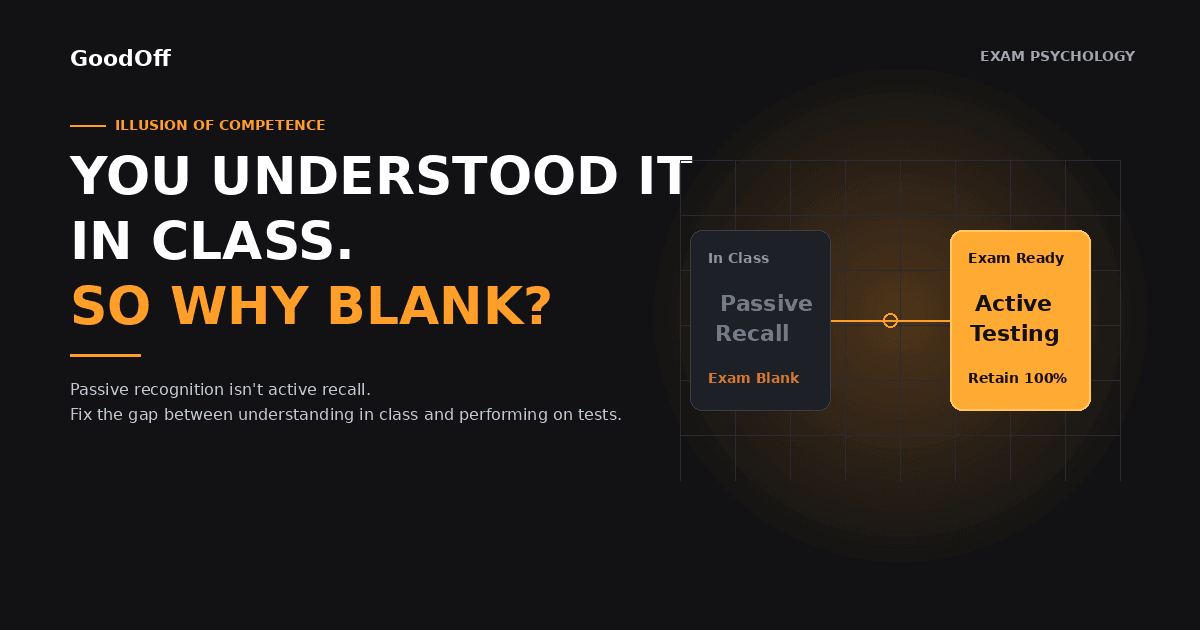
Close your notes and try to recall the key points, or answer practice questions. Recall builds stronger memories than rereading, and it shows you exactly what you still need to work on.
Use short timed blocks
The Pomodoro technique uses 25 minutes of focus followed by a 5-minute break. A timer makes starting easier because you only have to commit to one block. Read more in our post on the Pomodoro technique and procrastination.
Plan one or two goals per session
Write down exactly what "done" looks like before you start, such as "answer all 20 chapter 3 flashcards" or "summarize the causes of World War I from memory." Crossing it off is the win.
Use spare minutes
Ten minutes between classes is enough for a short review. Our guide to study sprints has more ideas for fitting study into small gaps.
How GoodOff Helps You Build Small Wins
A 200-page PDF is hard to start. GoodOff can turn it into a study guide with the key concepts, definitions, and likely exam questions, plus flashcards and a quiz. That gives you small, ready-made tasks to work through. Flashcards are scheduled with FSRS, so each day's review shows only the cards that are due. Quizzes explain each answer, so even a short session teaches you something.
Here's an example. You have 30 minutes before class. You review the flashcards due today for your biology unit, take a short quiz, and read the explanation for the two you missed. That's a real study session, finished before class starts.
Frequently Asked Questions
How do I stop feeling guilty about not studying?
Pick one small task you can finish today, like a 15-minute flashcard review, and do it. Taking action shrinks guilt faster than planning a big session you might not start.
Is cramming ever effective?
Cramming can help you pass a test that's hours away, but you'll forget most of it soon after. Spreading study over several days works much better for long-term memory.
How long should a study session be?
Short sessions of 15 to 30 minutes work well for review, especially if you do them most days. Harder tasks like problem sets may need longer blocks.
What counts as a small win when studying?
Any specific task you finish, such as reviewing a flashcard set, completing a practice quiz, or explaining one concept from memory.
Start Small Today
Don't try to make up for lost time in one night. Choose one topic, set a timer for 15 minutes, and test yourself on it. If you want ready-made flashcards and quizzes from your notes, try GoodOff.